
MediRemote provides a fingertip pulse oximeter designed for remote patient monitoring programs. The device helps healthcare practices collect oxygen saturation and pulse rate readings from patients between office visits as part of their ongoing RPM workflows.
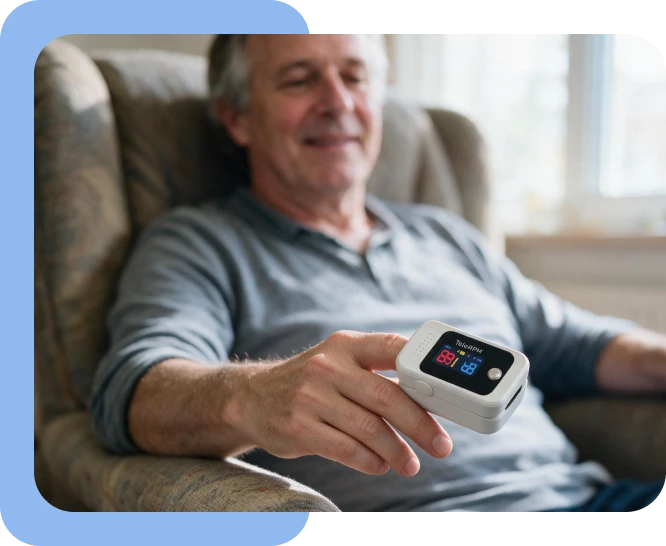
It is basically a little plastic clip that slides right onto a patient’s finger. The device does two things: it counts the pulse and checks how much oxygen is moving through the blood. A small screen shows the numbers in a couple of seconds, so anyone can use it at home without a doctor there to help.
Doctors put these clips in home tracking programs to see how patients are doing from week to week. To get a reading, a patient just pushes their finger into the clip and hits the start button. It takes almost no effort, which is why it works so well for getting regular breathing updates between office visits.
When practices add oxygen monitoring to an RPM program, the decision usually comes down to something simple: will this actually work for patients at home without creating extra work for the clinic?
That’s really what people mean when they look for the best pulse oximeter—not the most advanced device, but the one that fits into daily use without friction.
At the end of the day, the device only needs to do a few things well: give reliable oxygen readings and make it easy for patients to stay consistent at home. That consistency is what matters more than anything else in an RPM workflow.
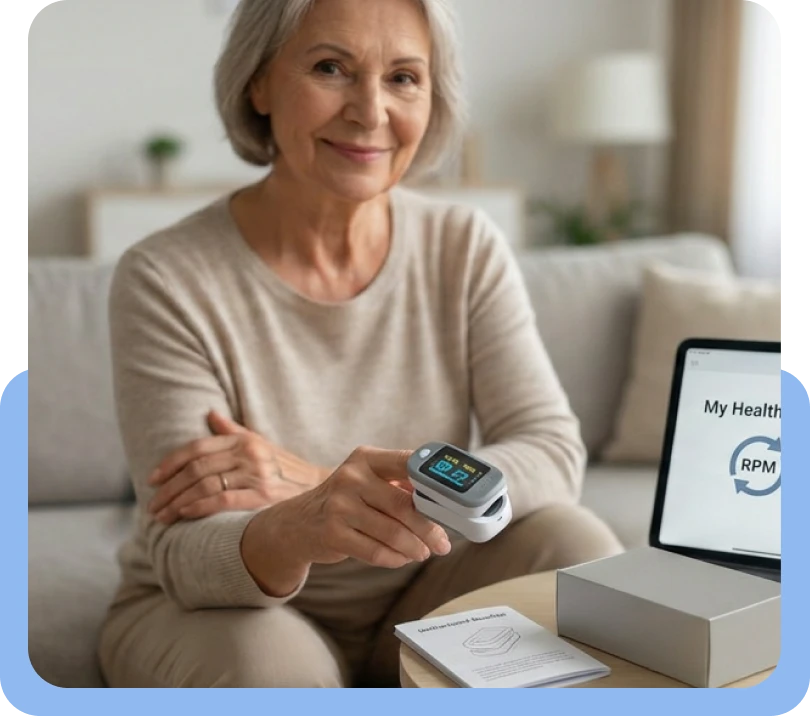
Most practices aren’t looking for “just a device.” They’re trying to run an RPM program that doesn’t become complicated to manage after rollout.
That’s usually where MediRemote fits in. The pulse oximeter is part of a broader setup that helps practices get patients started with home monitoring without overloading staff.
Patients use the device at home to take simple oxygen and pulse readings. Those readings then become part of the routine monitoring that the practice is already doing.
The main idea is to keep things workable in real life—easy for patients to use and easy for the practice to keep track of without extra steps or confusion.
When a practice uses the MediRemote pulse oximeter as part of an RPM program, the process is set up to stay simple from day one. Patients receive the device, get basic instructions, and start taking oxygen and pulse readings from home as part of their routine.
From there, it fits into how the RPM program already operates. Patients continue their normal routine at home, and the practice gets consistent oxygen and pulse readings without adding extra visits or manual follow-ups just for basic monitoring.
The goal is not to change how practices work—it’s to make home monitoring a steady, usable input inside the RPM program they already manage.
Our remote care programs help healthcare organizations extend clinical support beyond the office through continuous monitoring and proactive patient engagement.
The MediRemote pulse oximeter is designed for RPM programs that need a simple oxygen saturation monitor and a reliable SpO2 monitor for consistent home-based patient tracking.
Pulse oximeter monitoring can be incorporated into standard RPM billing workflows when program and Medicare requirements are met.
Common CPT codes include:
MediRemote supports structured RPM workflows that help clinics organize device monitoring, documentation, and billing activities.
COPD patients are one of the main groups using pulse oximeters in RPM programs.
With the MediRemote pulse oximeter, patients take oxygen readings at home instead of only during clinic visits. It becomes part of their daily routine between appointments.
From there, it fits into how the RPM program already operates. Patients continue their normal routine at home, and the practice gets consistent oxygen and pulse readings without adding extra visits or manual follow-ups just for basic monitoring.
The goal is not to change how practices work—it’s to make home monitoring a steady, usable input inside the RPM program they already manage.
Regular SpO₂ monitoring helps practices track oxygen saturation trends between visits and identify changes that may require clinical attention.
Pulse oximetry can complement other RPM devices, such as weight scales and blood pressure monitors, to provide a more complete picture of a patient's health.
Individuals recovering after hospitalization or surgery may benefit from routine oxygen monitoring as part of their recovery plan.
Patients with conditions such as asthma or pulmonary fibrosis may use pulse oximeters for ongoing oxygen saturation monitoring under their provider's guidance.
For patients with complex health needs, pulse oximetry can be combined with other RPM devices to support comprehensive remote monitoring.
Pulse oximeter monitoring is commonly included in RPM programs for patients who need ongoing oxygen saturation tracking between office visits. It helps practices collect consistent SpO₂ and pulse rate readings while supporting long-term care management.
MediRemote helps healthcare providers across multiple states deliver remote monitoring and ongoing support for COPD and other chronic conditions.

Most practices use MediRemote because it simplifies RPM setup, keeps patient monitoring consistent, and supports day-to-day oxygen and pulse tracking without adding operational complexity or extra administrative workload.
Patients can operate the fingertip device easily without training, helping practices avoid repeated instructions or support calls.
Oxygen and pulse readings are captured regularly, giving practices steady information for ongoing remote patient monitoring programs.
The same device setup can be rolled out across multiple patients, making RPM expansion more manageable for growing practices.
Designed to fit into existing RPM systems so practices don’t need to change current monitoring or documentation processes significantly.
Most practices add a pulse oximeter as part of a wider RPM setup to keep patient monitoring simple and consistent without adding operational burden.
With the MediRemote pulse oximeter, you can equip patients with an easy-to-use SpO2 monitor and start collecting oxygen saturation readings as part of your RPM workflow.
Stay informed with practical insights on RPM, CPT codes, Medicare billing, reimbursement, and chronic care management.
A pulse oximeter measures SpO₂ and pulse rate at home, allowing practices to collect regular readings through remote patient monitoring programs.
It helps patients take oxygen and pulse readings from home while practices use the data as part of their ongoing RPM workflow.
Patients with COPD, heart failure, respiratory conditions, or complex chronic needs may benefit from regular SpO₂ monitoring under provider guidance.
Yes. The fingertip design provides quick oxygen and pulse readings, making it simple for patients to use at home with minimal guidance.
Yes. Pulse oximeters can complement blood pressure monitors and weight scales, giving practices additional data for patients enrolled in RPM programs.