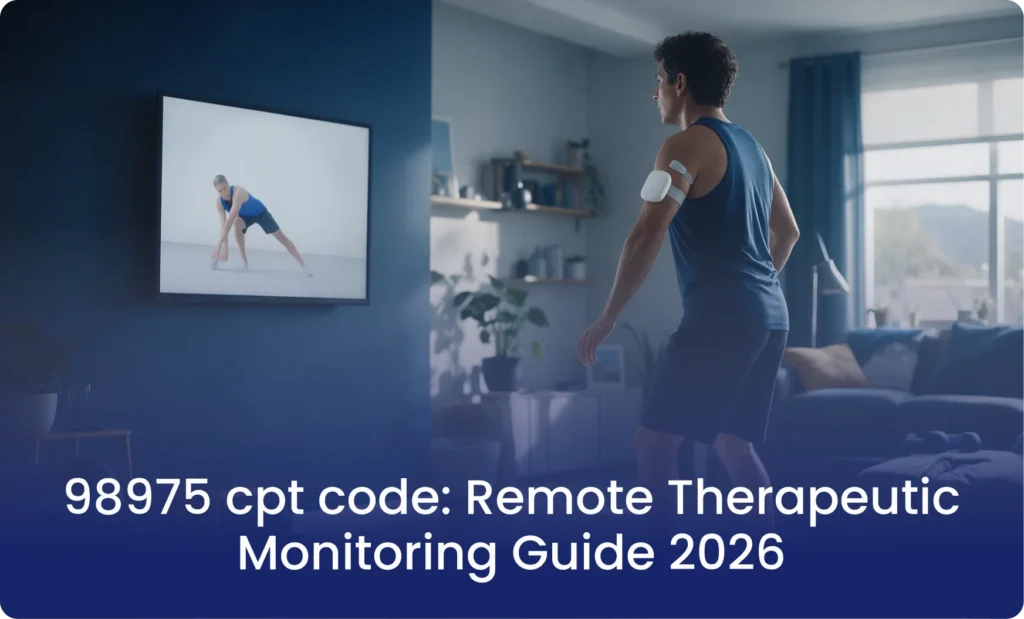
98975 cpt code indicates the initial setup and patient education on a remote therapeutic monitoring. In behavioural health, RTM refers to tracking the therapy related information. It includes exercise, adherence and mood.
Provider can bill 98975 cpt code when patient onboards to a remote therapeutic monitoring such as gets a wearable device, opts for a mobile therapy or installs a CBT app. It involves activities such as app installation, its use and answering the patient queries.
This comprehensive guide will explore everything including 98975 cpt code description, billing guidelines and reimbursement.
98975 Cpt Code Description
RTM is a program by Medicare that focuses on improving patient care. This program has various codes and reimbursement varies as per the state payer rules. You can visit to check the fee schedule. In simple words, there are two main categories of RTM codes.
- Device setup for the particular conditions
- Time spent on healthcare services.
Cpt 98975 is the first code indicating the initial setup and patient awareness about using the digital equipment. The code is billed as per the episode. Therefore, assigning accurate code is crucial for timely payments.
- CPT Code 98976: indicates the supply of device and monitoring respiratory data for at least 16 days of readings within a month.
- CPT Code 99897: is for the device supply and monitoring musculoskeletal data for 16 days of reading within a 30 days time.
While the 98978 refers to the device supply and monitoring of cognitive behavioural therapy with 16 days of reading under one month.
CPT 98975 Billing Guidelines
Correct billing helps providers receive payment without unnecessary delays. Remote Therapeutic Monitoring 98975 should always follow Medicare and payer rules. Every billed service needs clear medical records and supporting documents. Good documentation reduces claim errors and helps during audits. Providers should also review payer requirements before submitting claims. Following these guidelines improves billing accuracy and supports faster reimbursement.
Bill Once Per Treatment Episode
Bill CPT 98975 only once for each treatment episode. Do not report it again during the same episode. Bill it again only when a new treatment episode starts. Check the patient’s treatment dates before submitting the claim. Incorrect billing may lead to claim rejection.
Initial Setup Requirement
Complete the device setup before billing this code. Make sure the device works correctly. Connect the device to the patient successfully. Confirm monitoring can begin without problems. Record the setup date in the medical record.
- Set up the approved monitoring device.
- Test the device before patient use.
- Connect the device correctly.
- Record the setup completion date.
- Confirm the device is ready.
Patient Education
Teach the patient before remote monitoring begins. Explain every step in simple language. Make sure the patient understands the instructions. Good education helps collect accurate monitoring data. Keep proof that the education was provided.
- Explain how to use the device.
- Show how to record therapy data.
- Tell when to use the device.
- Answer the patient’s questions.
- Document the completed education.
Part of an RTM Treatment Plan
The monitoring service should support an active treatment plan. Treatment goals should be clear and measurable. Monitoring data should help guide patient care. Review the treatment plan during follow-up visits. Update it when the patient’s condition changes.
Documentation Requirements
Complete records support accurate billing and compliance. Missing information may delay reimbursement. Keep records clear, accurate, and up to date. Good documentation also supports future claim reviews.
- Record the setup date.
- Save patient education notes.
- Document the treatment plan.
- Keep monitoring activity records.
- Store all billing documents safely.
CPT 98975 Reimbursement
Understanding reimbursement helps providers plan accurate billing and improve revenue. Remote Therapeutic Monitoring 98975 may receive different payment amounts based on Medicare rules and payer policies. Payment can also change by location and insurance plan.
Providers should review the latest fee schedules before submitting claims. Checking payer requirements in advance helps reduce payment delays and claim denials. Knowing the reimbursement process also supports better financial planning for healthcare practices.
Average Medicare Reimbursement
Medicare assigns a payment amount for CPT 98975 each year. The amount may change after annual updates. Providers should review the latest Medicare Physician Fee Schedule. Do not rely on outdated payment rates. Always verify current reimbursement before billing.
Factors Affecting Payment
Several factors can affect the final payment amount. Medical necessity should support every billed service. Complete documentation helps avoid reimbursement delays. Missing records may lead to claim denials. 98975 reimbursement also depends on correct coding and claim accuracy.
Geographic Adjustments
Medicare adjusts payments based on the service location. Different regions may receive different reimbursement amounts. Local cost differences affect payment calculations. Providers should check rates for their practice location. Review local Medicare payment information regularly.
Commercial Payer Differences
Private insurance plans may follow different billing policies. Payment amounts often vary between insurance companies. Some payers may require additional documentation. Others may have different coverage rules. Verify each payer’s policy before submitting claims.
Verify Payer Policies Before Billing
Always review payer requirements before billing CPT 98975. Confirm coverage for the monitoring service. Check documentation and coding requirements carefully. Verify any prior authorization requirements if applicable. Following payer policies helps reduce claim rejections.
Documentation Requirements
Complete documentation supports accurate billing and faster claim processing. Every record should clearly show why the service was provided. Good records also help during audits and payer reviews. Providers should keep all information accurate, complete, and up to date. Missing documentation may lead to claim denials or delayed payment. Clear records also show that the service met billing requirements.
Provider Order
The provider should document the order before monitoring begins. The order should support the patient’s treatment needs. Keep the order in the patient’s medical record.
Device Setup Date
Record the exact date when the device was set up. This confirms when monitoring services started. Keep the setup information easy to review.
Patient Education
Document that the patient received device instructions. Record what education was provided. Note that the patient understood the instructions.
Device Used
Include the name or type of monitoring device. Record the device used for patient care. Make sure the device matches the treatment plan.
Treatment Plan
Keep a written treatment plan in the medical record. The plan should include therapy goals. Update the plan when the patient’s needs change.
Patient Consent
Some payers require patient consent before billing. Obtain consent when required by the payer. Record the consent in the medical record. Keep the documentation for future reference.
CPT 98975 vs Related RTM Codes
Remote Therapeutic Monitoring includes several CPT codes, and each serves a different purpose. Understanding these differences helps providers choose the correct code and avoid billing errors. The table below compares CPT 98975 with other commonly used RTM codes.
| CPT Code | Purpose | Billing Frequency |
| 98975 | Initial device setup and patient education | Once per treatment episode |
| 98976 | Respiratory monitoring device supply | Every 30 days |
| 98977 | Musculoskeletal monitoring device supply | Every 30 days |
| 98980 | RTM treatment management, first 20 minutes | Monthly |
| 98981 | Each additional 20 minutes of treatment management | Monthly |
Conclusion
Understanding Remote Therapeutic Monitoring 98975 helps providers bill services correctly and reduce claim errors. This code covers the initial device setup and patient education for eligible patients.
Following billing guidelines, maintaining complete documentation, and verifying payer requirements can improve reimbursement and support compliance.
Providers should also stay updated with the latest Medicare and commercial payer policies. Accurate coding leads to smoother claim processing and better financial outcomes.
At MediRemote, we help healthcare providers simplify RTM billing, improve documentation, and maximize reimbursement through reliable remote care solutions.
FAQs
What is CPT 98975 used for?
CPT 98975 covers the initial setup of a remote therapeutic monitoring device and patient education before monitoring services begin.
How often can CPT 98975 be billed?
CPT 98975 can be billed only once for each treatment episode. It should not be reported repeatedly during the same episode.
What is the Medicare reimbursement for CPT 98975?
Medicare reimbursement varies by year and geographic location. Providers should always verify the latest Physician Fee Schedule before billing.
Who can bill CPT 98975?
Qualified healthcare providers who meet RTM billing requirements and follow payer guidelines may report CPT 98975 when appropriate.
Can CPT 98975 be billed with CPT 98976 or 98977?
Yes. CPT 98975 is commonly billed with CPT 98976 or 98977 when all billing requirements and documentation standards are met.
What documentation is required for CPT 98975?
Documentation should include the provider order, device setup date, patient education, treatment plan, device details, and consent when required by the payer.