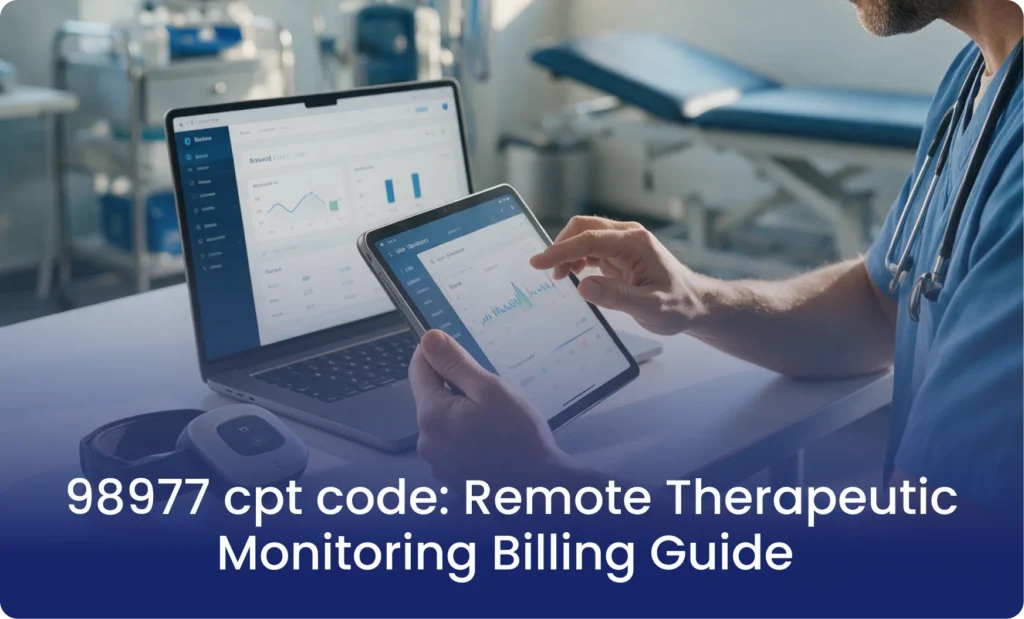
98977 cpt code is used for remote therapeutic monitoring through a bluetooth-enabled device.These include flow meters, motion trackers and spirometers. Healthcare experts track non-physiological data such as musculoskeletal system, respiratory system, and therapy adherence.
CMS introduced these RTM codes back in 2022 for improving access to care and achieving better outcomes. Assigning these codes help providers get reimbursement against the services given.
This 98977 billing guide will explore everything you need to know about RTM (Remote therapeutic monitoring) in detail.
98977 cpt code: Overview
Remote patient monitoring has gained significant popularity. Medicare payments for remote patient monitoring increased from $5.5 million in 2019 to more than $101 million in 2021, reflecting strong growth in remote monitoring services
Remote therapeutic monitoring is a technology allowing providers to track patient reports, health status and their routine of following the given treatment plan. Healthcare experts such as
- Physicians,
- Mid-level providers,
- Qualified healthcare practitioners,
- PTs, OTs, and SLPs.
Use FDA-approved devices to monitor status of the musculoskeletal system, respiratory system, and therapy adherence. However, it might include cognitive behavioural therapy on the later stages of expansion.
When Should You Bill 98977?
You can bill 98977 CPT Code when a patient is enrolled in a remote therapeutic monitoring (RTM) program for a musculoskeletal condition and meets the required billing criteria. The patient must need ongoing monitoring to support treatment and recovery outside the clinic.
Common conditions that qualify for 98977 RTM musculoskeletal services include:
- Arthritis
- Low back pain
- Joint injuries
- Post-surgical rehabilitation
- Tendon disorders
- Other orthopedic conditions that require ongoing recovery monitoring
The monitoring device must meet the FDA definition of a medical device and be capable of collecting and transmitting therapy-related data.
To report the code, the device should be supplied for a 30-day period and record data on the minimum number of required days during that billing cycle.
The transmitted information must be available for the treating provider to review and use in patient management. Meeting these requirements helps support compliant billing and proper documentation for remote therapeutic monitoring orthopedic services.
Common Orthopedic Use Cases
98977 CPT Code supports remote therapeutic monitoring orthopedic programs across many conditions. Providers use it when recovery needs regular tracking outside the clinic. It helps monitor symptoms, therapy progress, and treatment adherence over time.
Common use cases include:
- Post-operative recovery: Track healing after orthopedic surgery.
- Knee replacement: Monitor pain, mobility, and exercise progress.
- Hip replacement: Follow recovery and daily movement improvements.
- Shoulder rehabilitation: Measure range of motion during therapy.
- Back pain: Monitor symptoms and home exercise compliance.
- Physical therapy: Track prescribed exercises between clinic visits.
- Sports injuries: Support safe recovery before returning to activity.
- Arthritis: Monitor pain levels and functional improvement over time.
These examples show how 98977 RTM musculoskeletal services help providers monitor recovery and adjust treatment when needed.
98977 Billing Requirements
Accurate billing starts with meeting every program requirement. 98977 CPT Code has specific rules for device use, monitoring, and documentation. Missing any requirement may lead to claim delays or denials. The following guidelines help providers bill the code correctly.
Device Requirements
The device should collect therapy-related data automatically. It must support 98977 RTM musculoskeletal services. General wellness apps or manual patient logs alone do not meet this requirement. The device should be supplied for one 30-day billing period. Providers should also document the device details in the patient’s record.
Monitoring Period
98977 CPT Code is billed once for each 30-day monitoring period. The device must be available throughout that billing cycle. The patient should meet the minimum monitoring day requirement before the code is reported.
Providers should confirm the monitoring dates before claim submission. Billing should match the actual monitoring period shown in the records.
Data Collection Rules
The monitoring device must collect and transmit therapy-related data. Providers should receive enough information to review the patient’s progress. The collected data should support ongoing treatment decisions. Records should clearly show when the data was received. Missing or incomplete data may not support compliant billing.
Monthly Billing Limits
This code is reported only once during a 30-day period for each eligible patient. It should not be billed multiple times for the same monitoring cycle. Providers should verify that all billing requirements are complete before submitting a claim. They should also follow payer-specific policies because coverage rules may differ.
Required Patient Participation
Regular participation helps generate enough data for clinical review. Providers should educate patients on proper device use before monitoring begins. They should also encourage consistent use during recovery.
This is especially important in remote therapeutic monitoring orthopedic programs, where treatment decisions often depend on accurate monitoring data.
Good patient participation supports complete documentation and helps demonstrate medical necessity for 98977 billing guide compliance.
Documentation Checklist for 98977
Every record should clearly show why 98977 CPT Code was medically necessary and confirm that all billing requirements were met.
- Provider order: Include the provider’s order for remote therapeutic monitoring services.
- Diagnosis: Document the musculoskeletal condition being monitored and treated.
- Device details: Record the FDA-defined medical device used during the monitoring period.
- Monitoring dates: List the start date, end date, and completed monitoring period.
- Data transmission proof: Keep records showing the device collected and transmitted therapy-related data.
- Patient consent: Document patient consent if required by the payer or your practice policy.
- Clinical notes: Record provider reviews, patient progress, symptoms, and treatment decisions based on the monitored data.
- Medical necessity: Explain why ongoing monitoring was needed and how it supported the patient’s treatment plan.
Before submitting a claim, verify that the documentation is complete, accurate, and consistent with payer requirements. A well-documented record strengthens 98977 billing guide compliance, supports reimbursement, and reduces the risk of audits or payment delays.
98977 Reimbursement Overview
Reimbursement for 98977 CPT Code depends on meeting payer requirements and submitting complete documentation. Correct coding and accurate records improve the chances of successful claim processing.
Medicare may reimburse this code when all RTM billing requirements are met. The service must include a qualifying medical device, the required monitoring period, and supporting clinical documentation. Providers should also follow the latest Medicare billing policies.
Several factors can affect reimbursement.
These include
- Medical necessity,
- Diagnosis coding,
- Documentation quality,
- Claim accuracy, and
- Compliance with payer guidelines.
Missing information or billing errors may delay or reduce reimbursement.
Commercial insurance plans may follow different coverage policies than Medicare. Some payers have additional documentation requirements or their own billing rules for 98977 RTM musculoskeletal services. Coverage may also vary between health plans.
Reimbursement amounts can differ based on the payer, provider contract, geographic location, and annual policy updates. Reviewing current payer guidelines before claim submission helps reduce denials and supports accurate reimbursement for remote therapeutic monitoring orthopedic services.
98977 vs 98984
Both codes support remote therapeutic monitoring (RTM), but they serve different purposes. 98977 covers the supply of a musculoskeletal monitoring device. While 98984 is used for treatment management services. Understanding these differences helps providers report the correct code and avoid billing errors.
| Feature | 98977 | 98984 |
| Purpose | Device supply for musculoskeletal RTM | RTM treatment management service |
| Monitoring period | 30-day device supply period | Reported after meeting required treatment management time |
| Device supply | Yes | No |
| Billing frequency | Once per 30-day monitoring period | Based on completed treatment management service requirements |
| Typical use | Monitoring recovery and therapy adherence for musculoskeletal conditions | Reviewing patient data, communicating with the patient, and managing the treatment plan |
Conclusion
Understanding 98977 CPT Code is essential for accurate RTM billing and compliant reimbursement. Providers should meet all billing requirements, use an FDA-defined medical device, maintain complete documentation, and follow payer-specific guidelines before submitting claims.
Correct reporting supports timely reimbursement and reduces the risk of denials or audits. As RTM adoption continues to grow, following current Medicare and commercial payer policies becomes even more important.
If your practice needs expert support with 98977 RTM musculoskeletal billing or other remote therapeutic monitoring services, MediRemote can help streamline documentation, coding, claim submission, and reimbursement while keeping your workflow compliant and efficient.
FAQs
What does CPT 98977 cover?
98977 CPT Code covers the supply of an FDA-defined medical device used for remote therapeutic monitoring of musculoskeletal conditions during a 30-day monitoring period.
Is CPT 98977 only for musculoskeletal monitoring?
Yes. 98977 is specifically used for RTM musculoskeletal monitoring. Respiratory remote therapeutic monitoring services are reported using different CPT codes.
Can physical therapists bill 98977?
Yes. Eligible physical therapists and other qualified healthcare professionals may bill 98977 when they meet payer requirements and follow applicable billing guidelines.
Can 98977 and 98984 be billed together?
They may be billed together when all coding, documentation, and payer requirements are met because each code represents a different RTM service.
What documentation is required for CPT 98977?
Documentation should include the provider order, diagnosis, device details, monitoring dates, transmitted data, clinical notes, and medical necessity supporting the service.
How often can CPT 98977 be billed?
98977 CPT Code is reported once per eligible 30-day monitoring period after all billing requirements have been satisfied and properly documented.