
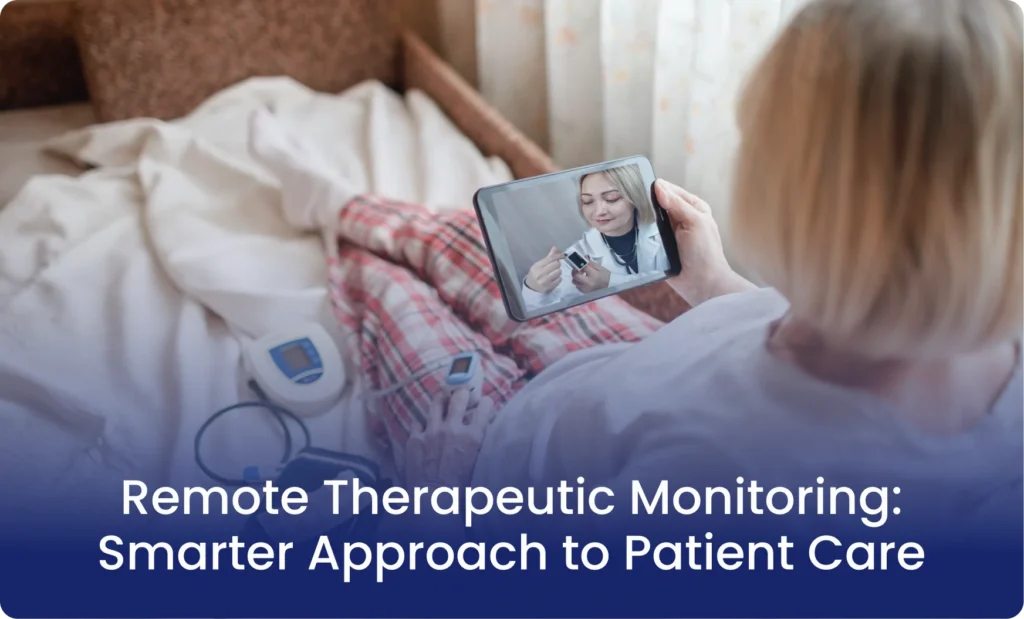
Remote Therapeutic Monitoring is becoming a vital component of today’s healthcare as it enables providers to maintain connections with their patients even after a visit has finished. The clinics implement RTM technology for tracking patient progress and making timely care decisions.
The concept of remote therapeutic monitoring revolves around improving patient experience and implementing a more efficient care system. RTM technology enables healthcare providers to remain engaged with their patients during the period between visits by monitoring therapy adherence and treatment outcomes using digital tools. Providers will be able to detect problems and guide patients towards achieving their treatment goals rather than waiting weeks or months.
In this blog post, we will discuss how RTM works and provide practical suggestions for getting started.
What is Remote Therapeutic Monitoring?
Remote Therapeutic Monitoring is a healthcare service that allows providers to track a patient’s therapy-related progress outside the clinic. It is commonly used to monitor things like
- Pain levels
- Medication response
- Musculoskeletal function
- Patient adherence
- Prescribed treatment plan
RTM helps clinicians stay informed in real time so they can make better decisions. The doctor can adjust care when needed and supports patients more effectively. It also improves engagement and adds a structured way to manage follow-up care for practices.
How Does Remote Therapeutic Monitoring Work?
Remote Therapeutic Monitoring works by connecting patients and providers through simple tools that track therapy progress outside the clinic. It assists providers in staying informed about what’s happening at home while keeping the patient actively involved in their care plan.
- Patient gets a device or app
- Data is collected automatically
- Clinical team reviews the data
- The provider communicates with the patient
- The care plan is adjusted as needed
- Ongoing monitoring and follow-up
- Documentation and billing support
What Conditions Are Covered by Remote Therapeutic Monitoring?
Remote therapeutic monitoring is frequently employed for patients who require ongoing assistance for their therapy-based treatment outside appointments. It is particularly effective when the provider wishes to monitor a patient’s progress and treatment reaction.
1. Musculoskeletal conditions
- Osteoarthritis
- Rheumatoid arthritis
- Tendonitis
- Post-orthopedic surgery recovery
- Bone fractures
2. Respiratory conditions
- Asthma
- COPD (Chronic Obstructive Pulmonary Disease)
- COVID-19-related lung complications
3. Cognitive Behavioral Data
- Anxiety
- Depression
- PTSD (Post-Traumatic Stress Disorder)
- Bipolar disorder
4. Chronic Pain Management
Ongoing symptom reporting allows clinicians to evaluate treatment response and adjust care plans when necessary.
RTM is not meant for every patient. However, it works effectively in cases when follow-ups and reports from real-life situations may enhance the outcomes. It provides providers with additional information about what happens beyond the clinics. This enables them to take action and make decisions more quickly and accurately.
FDA-Approved Remote Therapeutic Monitoring Devices
Remote therapeutic monitoring devices are usually software applications that enable providers to monitor and keep track of the therapy progress at home. All remote therapeutic monitoring devices should comply with the FDA‘s definition of medical devices, devices that are meant for the purpose of diagnosing, treating, or monitoring some diseases and not for wellness tracking.
These are the most popular and effective FDA-approved or registered devices and platforms:
- Smartwatches and activity trackers
- Inhaler sensors
- Spirometers and peak flow meters
- Computer vision and digital therapy platforms
- Software as a Medical Device
The key is picking devices that fit your patients’ specific needs and integrate smoothly into their daily routine. Medi Remote helps match the right solutions to each case so monitoring feels supportive. Always verify with your billing team or provider that the device qualifies for RTM reimbursement.
Remote Therapeutic Monitoring CPT Codes
Understanding the right CPT codes is essential for accurate billing and reimbursement when you are using RTM in your practice. RTM codes were introduced to help providers track therapy-related progress and patient adherence outside the clinic.
The essential remote therapeutic monitoring codes are grouped into three clear operational categories:
1. Onboarding and Patient Education
- CPT Code 98975:
This code covers the initial time spent onboarding a patient and explaining how to use it. It can be billed just once per episode of care when monitoring officially begins.
2. Device Supply and Data Transmission (30-Day Cycle)
These codes reimburse the cost of leasing or providing the technology. They are divided by physiological system and the specific number of days data was transmitted:
- CPT Code 98985:
Covers the supply of a musculoskeletal tracking device that transmits data for 2 to 15 days within a 30-day period. This is a game-changer for short-term post-op orthopedic monitoring.
- CPT Code 98977:
Used when an FDA-compliant musculoskeletal tracking device captures and transmits data for 16 or more days within a 30-day window.
- CPT Code 98984:
Reimburses the supply of a respiratory device that transmits tracking data for 2 to 15 days over a 30-day cycle.
- CPT Code 98976:
Used for respiratory tracking devices that successfully transmit data for 16 or more days in a 30-day period.
3. Clinical Treatment Management
These time-based codes cover the hours your clinical team spends reviewing dashboards and interpreting adherence metrics.
- CPT Code 98979:
Covers the first 10 to 19 minutes of remote clinical review time accumulated in a calendar month. It requires at least one synchronous and interactive communication with the patient.
- CPT Code 98980:
Covers the first 20 minutes of care management time within a calendar month. It also requires a minimum of one live & interactive communication.
- CPT Code 98981:
An add-on code is used for each additional 20 minutes of care management completed after the initial 20-minute threshold of code 98980 is met.
Who Can Bill RTM Services?
Not every healthcare provider can automatically bill for RTM services. But CMS has made the rules clear enough that many practices can add this to their workflow. The key is understanding which provider types qualify and what requirements they must meet.
- Physicians
- Physician Assistants
- Nurse Practitioners
- Physical Therapists and Occupational Therapists
- Speech-Language Pathologists
- Other non-physician providers may also qualify in certain cases
- Billing staff must be trained to use the correct CPT codes and document time accurately
- Patient consent is required before initiating RTM services
- Supervision rules apply
RTM Eligibility and Requirements
Remote Therapeutic Monitoring is a powerful tool. But it’s not for every patient or every practice. You need to understand who qualifies and what CMS requires before you start monitoring to use it effectively and bill correctly.
Eligibility
The common eligibility factors for remote therapeutic monitoring include the following:
- The patient must have a documented therapy-related condition or a recovery plan that needs ongoing tracking.
- RTM is not meant for general wellness monitoring. It should support a specific treatment plan.
- The patient must agree to use the device or app and send data back to the provider logically and consistently.
- The provider must have a legitimate reason to monitor the patient.
- Patients do not need to be in a high-risk category. But they should benefit from more frequent check-ins than a standard office visit allows.
Requirements
Healthcare providers must meet the following operational and regulatory requirements:
- Written patient consent is required before starting RTM services.
- The provider must use an appropriate RTM device or platform.
- Clinical staff must review the data and communicate with the patient within the time frame required for billing.
- Time must be documented accurately. It should include both data review time and interactive communication time.
- The care plan must be updated or adjusted when needed, based on the patient’s data trends.
- Billing staff must follow CMS rules for RTM. This represents the correct CPT codes and documentation standards.
- Supervision requirements apply. This means the billing provider oversees the staff who monitor and communicate with the patient.
RTM vs Remote Patient Monitoring
People often mix up Remote Therapeutic Monitoring and Remote Patient Monitoring. But they are not the same. The biggest difference is what they track and why.
Here is a clear comparison between these two:
| Feature | Remote Therapeutic Monitoring | Remote Patient Monitoring |
| Primary Purpose | Monitors treatment adherence and therapeutic progress | Monitors physiological health data and vital signs |
| Data Collected | Non-physiological data | Physiological data |
| Common Conditions | Musculoskeletal disorders, respiratory diseases, rehabilitation, chronic pain | Hypertension, diabetes, heart disease, heart failure, chronic disease management |
| CPT codes | 98975, 98976, 98977, 98978 | 99457, 99458, 99454, 99091, etc. |
| Data type | Behavioral and functional data | Clinical vital sign data |
| Patient consent | Required | Required |
| Time requirement | 20-minute units for communication and data review | 20-minute units for chronic care management |
| Goal | Improve therapy outcomes and adherence | Prevent complications and manage chronic conditions |
Benefits of Remote Therapeutic Monitoring
Remote therapeutic monitoring is a practical way to improve how care is delivered. RTM creates stronger connections between patients and providers while giving your practice a clearer path to reimbursement.
- Better patient engagement
- More timely care decisions
- Improved treatment adherence
- Reduced the need for unnecessary visits
- Stronger communication between the patient and the provider
- Clearer picture of real-world progress
- New reimbursement opportunity for practices
- Supports chronic and post-injury care
- More efficient workflow for clinical staff
- Enhanced patient satisfaction
Why Choose MediRemote for RTM Services?
Choosing the right platform for remote therapeutic monitoring can make or break your program. Medi Remote stands out because it’s built for real clinical workflows. It gives you the tools to monitor patients effectively and communicate clearly. It also helps you bill confidently without adding extra stress to your team.
- All-in-one RTM platform
- HIPAA-Compliant Security You Can Trust
- Expert Care Team with 24/7 Support
- Convenience and Accessibility Across Multiple States
- Proven Results That Make a Difference
- Real-time data and insights
- FDA-Compliant Hardware & Flexible Software
Frequently Asked Questions
Can RTM improve patient satisfaction?
Yes. Patients feel more supported when their provider tracks progress and responds quickly to changes. This improves their overall experience.
Do I need special training to use RTM?
Most RTM platforms are designed to be user-friendly. Your employees can pick things up fast with the help and training of your RTM provider.
How secure is the MediRemote platform really?
We use enterprise-level encryption and security standards. Privacy is taken seriously so you can focus on healing.
What happens if a patient stops using the device?
Our team should get in touch with a patient who discontinues using the RTM tool to find out why and re-engage them. You may stop billing if the patient does not return.
How does RTM help with reimbursement?
RTM has its own CPT codes. You can bill for the time spent monitoring and communicating with the patient outside of visits.