
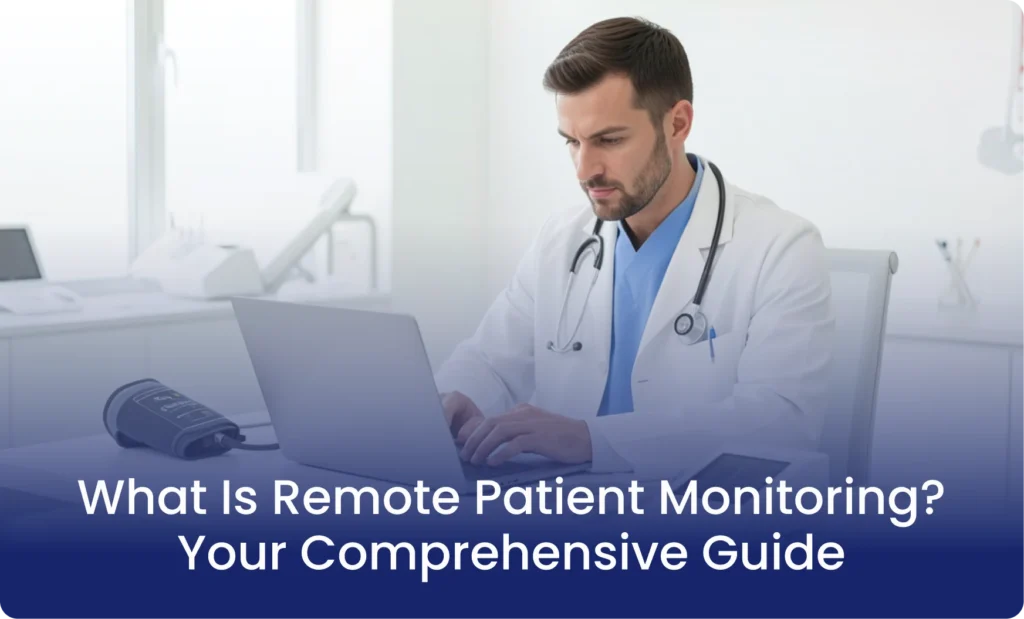
Imagine waking up one morning and checking your blood pressure or glucose levels right from your room. Then knowing your doctor is already reviewing that information. That is not science fiction. It is the reality of remote patient monitoring.
RPM is quickly becoming one of the most practical ways to keep track of patients without bringing them into the clinic every time. It can mean fewer gaps in care and earlier support for patients managing chronic conditions. It is also a more convenient way to stay connected with their healthcare team.
RPM opens the door to better follow-up and stronger patient engagement for providers. This guide explains what Remote Patient Monitoring is and how MediRemote helps practices use it to improve care simply.
Remote Patient Monitoring Explained
RPM is basically an effective technology that allows tracking the health status of a patient outside the traditional clinical environment. With the help of connected medical devices, it is possible to monitor important health readings of a patient in his/her own home. Doctors will have an opportunity to observe what is going on between visits. It is particularly beneficial for patients suffering from chronic diseases.
The key advantage of Remote Patient Monitoring is the fact that it allows transforming regular data into clinical action. With the help of this approach, it is possible to take measures much earlier if the numbers start to indicate something negative. The use of RPM allows patients to feel more comfortable during the whole period of treatment.
How Does Remote Patient Monitoring Work?
Remote Patient Monitoring provides a connection between patients and providers with the help of regular health data gathered at home. It helps them understand how a patient is doing between appointments.
Here is how does RPM work for providers and patients:
1. A patient uses connected devices
The process usually starts with a patient using FDA-approved or clinically validated devices. These devices are designed to capture health data accurately and consistently so providers can rely on the information they receive. The setup is simple enough for patients to use at home without feeling overwhelmed.
2. Readings are sent to a secure platform
The measurement data is transferred to a remote monitoring platform through a connected platform or wireless system. The information is stored securely in the platform and organized for the care team to review. This creates a continuous flow of patient data.
3. The care team reviews the information
They then proceed to observe the reading for any kind of pattern or signal that may need any kind of further investigation. This way, the care provider will be able to take action before it turns out to be a problem for the patient who is suffering from high blood pressure.
4. Follow-up when required
If the data collected shows anything worth paying attention to, a follow-up is scheduled for the patient. This may involve a review of medication or a request to come for a physical visit. The purpose is to enhance the effectiveness of traditional care.
Common Medical Use Cases for RPM
RPM has a great variety of applications in medicine when it comes to tracking patients’ conditions. The most important one lies in the fact that RPM allows doctors to gain information about their patients outside the clinical setting.
Here are some of the most frequent and impactful use cases:
- Hypertension management
- Diabetes care
- Heart failure monitoring
- COPD and respiratory care
- Post-discharge follow-up
- Chronic kidney disease support
- Maternal health monitoring
- Medication management
- Older adult care
- Preventive and proactive care
Operational Benefits of Remote Patient Monitoring
The operational side of remote patient monitoring delivers some of the most practical value for both healthcare practices and patients. The operational benefits create smoother workflows and better sustainability in care delivery.
Here is a closer look at the key operational advantages:
- Reduced Hospital Readmissions and Emergency Visits
- More Efficient Use of Provider Time
- Improved Patient Engagement and Adherence
- Scalable Chronic Care Management
- Better Revenue Opportunities with Reimbursement
- Enhanced Data-Driven Decision Making
- Streamlined Care Coordination
- Greater Patient Satisfaction and Retention
Implementing RPM in your practice
Deciding to add remote patient monitoring to your practice is a big step. A structured implementation meaningfully improves patient outcomes while strengthening your operational efficiency.
Here is a step-by-step framework to help you get it right.
1. Identify the right patients
Start by choosing patients who are most likely to benefit from RPM. It also helps to focus on patients who are willing to engage with the process and use devices consistently at home. A well-chosen patient group makes the program more effective from the beginning.
2. Set up the devices and platform
Select reliable monitoring devices and a secure platform that can collect, organize, and display patient data clearly. The technology should be simple enough for patients to use without confusion. It should also be structured enough for your care team to review information efficiently.
3. Build a clear workflow
Identify individuals on your team who will read the reports, respond to alarms, communicate with patients, and track their actions before you start. This ensures that a process flow is created for the program to work smoothly as the number of patients increases. This is crucial as remote patient monitoring works well if the roles are clearly defined in the beginning.
4. Educate patients and your staff
Patient education is extremely critical because no matter how good the monitoring system is, it will be useless if patients do not know how to use it. Teach the patients how to take their measurements and report to the doctors. Do this for your entire team as well.
5. Monitor, refine, and improve
Review what is working once the program is live and where the process needs adjustment. Look at the important metrics such as
- Patient engagement
- Data quality
- Staff workload
- Follow-up outcomes
RPM becomes much more effective over time when you treat it as an evolving part of care delivery rather than a one-time implementation.
Remote Patient Monitoring Vs. Telehealth
People often use the terms remote patient monitoring and telehealth interchangeably. But their difference is clear. Telehealth remote monitoring difference lie in their functions. Here is a straightforward comparison:
| Aspect | Remote Patient Monitoring | Telehealth |
| Main purpose | Tracks patient health data over time | Connects patients and providers through virtual visits |
| Type of care | Ongoing monitoring and follow-up | Real-time consultation and advice |
| Data used | Blood pressure, glucose, oxygen levels, weight, and other readings | Symptoms, concerns, questions, and a video or phone conversation |
| Best for | Chronic care managementPost-discharge follow-upEarly intervention | Routine check-insUrgent questions Access to care from home |
| Provider action | Reviews trends and responds based on patient readings | Talks with the patient directly during the visit |
| Patient experience | Regular home-based monitoring with device use | Scheduled online or phone appointments |
| Goal | Catch problems early and improve long-term outcomes | Make care more accessible and convenient |
Measuring ROI and Clinical Impact
Remote patient monitoring can deliver impressive results. But those outcomes only become clear when you measure them properly. Tracking both financial returns and clinical improvements gives the full picture of ROI and clinical impact.
Why Measurement Matters in RPM Programs
It’s easy to rely on assumptions rather than evidence without clear metrics. Good measurement helps justify continued investment and identify areas for improvement. The most successful programs treat data as a tool for ongoing refinement rather than just a reporting requirement.
Key Clinical Outcomes to Track
Focus on metrics that reflect real improvements in patient health:
- Hospitalization and Readmission Rates
- Chronic Disease Control
- Patient Engagement Levels
- Quality of Life Indicators
Financial ROI Considerations
On the business side, look beyond simple revenue:
- Reimbursement Revenue
- Cost Savings
- Program Costs
- Break-Even Timeline
Practical Tips for Effective Measurement
Establish a straightforward dashboard that can be analyzed by your team on a monthly basis. Begin with 4-6 critical metrics rather than overwhelming yourself with all the data at once. Utilize the reporting capabilities of your EHR or RPM software, and do not hesitate to reach out to your technology partner to create custom reports.
Keep in mind that statistics account for just half of the situation. Speak with your patients and clinicians on a regular basis, since they tend to reveal the advantages that are not evident from spreadsheet analysis in order to avoid future challenges.
Conclusion
Remote Patient Monitoring is quickly becoming a practical way for healthcare practices to stay connected with patients. It offers convenience and peace of mind for patients. For providers it creates a smarter and more proactive way to deliver support. RPM can improve engagement and make everyday care feel more responsive.
At MediRemote, the focus is on helping practices bring that value into real-world care. Our HIPAA-compliant platform and easy-to-use devices are designed to make remote care feel personal and reliable.
We encourage you to reach out if you are curious about the remote patient monitoring program. A short conversation with the MediRemote team can answer your specific questions.
Frequently Asked Questions
What is remote monitoring for chronic disease?
Remote monitoring for chronic disease is a way to track a patient’s health data from home using connected medical devices. It helps providers monitor ongoing chronic conditions more closely and make care decisions sooner.
Will insurance cover remote patient monitoring?
Many plans do cover RPM when it’s medically necessary. MediRemote works with patients and providers to verify coverage and handle the details.
Can you give an RPM technology overview?
RPM technology typically includes three parts:
- Patient education and setup
- A connected device that collects and transmits readings
- Clinician review of the data for treatment management
Is patient data secure in RPM?
Reputable RPM platforms are built to handle health information securely. Practices should always choose solutions that follow proper privacy and data protection standards.
Do patients need special training for RPM?
Only basic guidance is needed normally. Most patients can learn how to take readings and submit data with a short explanation and a little practice.
Is there a risk of getting too many alerts or calls?
Effective programs personalize alerts so you only receive communication from the team when it’s actually necessary. The majority of patients find the communication to be beneficial.