
MediRemote helps clinics run remote weight monitoring programs by supporting device coordination, patient onboarding, and RPM documentation so staff aren’t burdened with ongoing operational work.
Most challenges aren’t selecting a scale—they’re maintaining consistent patient participation and reliable weight readings once patients leave the clinic and begin home monitoring.
But in practice, it often becomes a manual process:
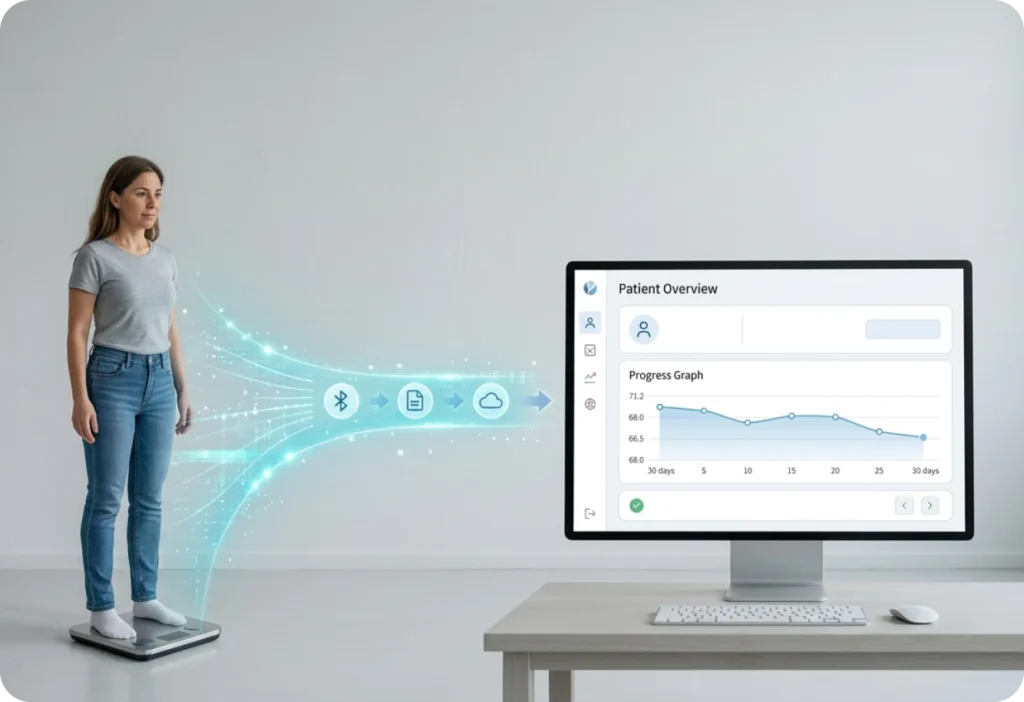
MediRemote helps clinics structure remote weight monitoring programs so readings actually reach the care team without constant follow-up work.
A common issue with traditional Bluetooth weight scale setups is dependency on patient devices. If the phone is off, not paired, or out of range, the reading never reaches the clinic.
This reduces friction for both patients and clinic staff and supports more consistent remote weight monitoring.
MediRemote focuses on the operational side of RPM programs, not just the device itself. For weight monitoring programs, this includes support across the entire workflow:
Ongoing engagement support
Weight data is only useful when it is easy to review. Many clinics struggle with scattered readings across multiple systems or incomplete logs from patients. MediRemote helps structure incoming data from digital weight scale devices so care teams can review it efficiently during patient visits or remote check-ins.
Whether used in routine chronic care or RPM programs, structured data helps reduce time spent searching for missing information.

The weight scale used in RPM programs needs to be simple enough for daily use while remaining reliable for clinical tracking.
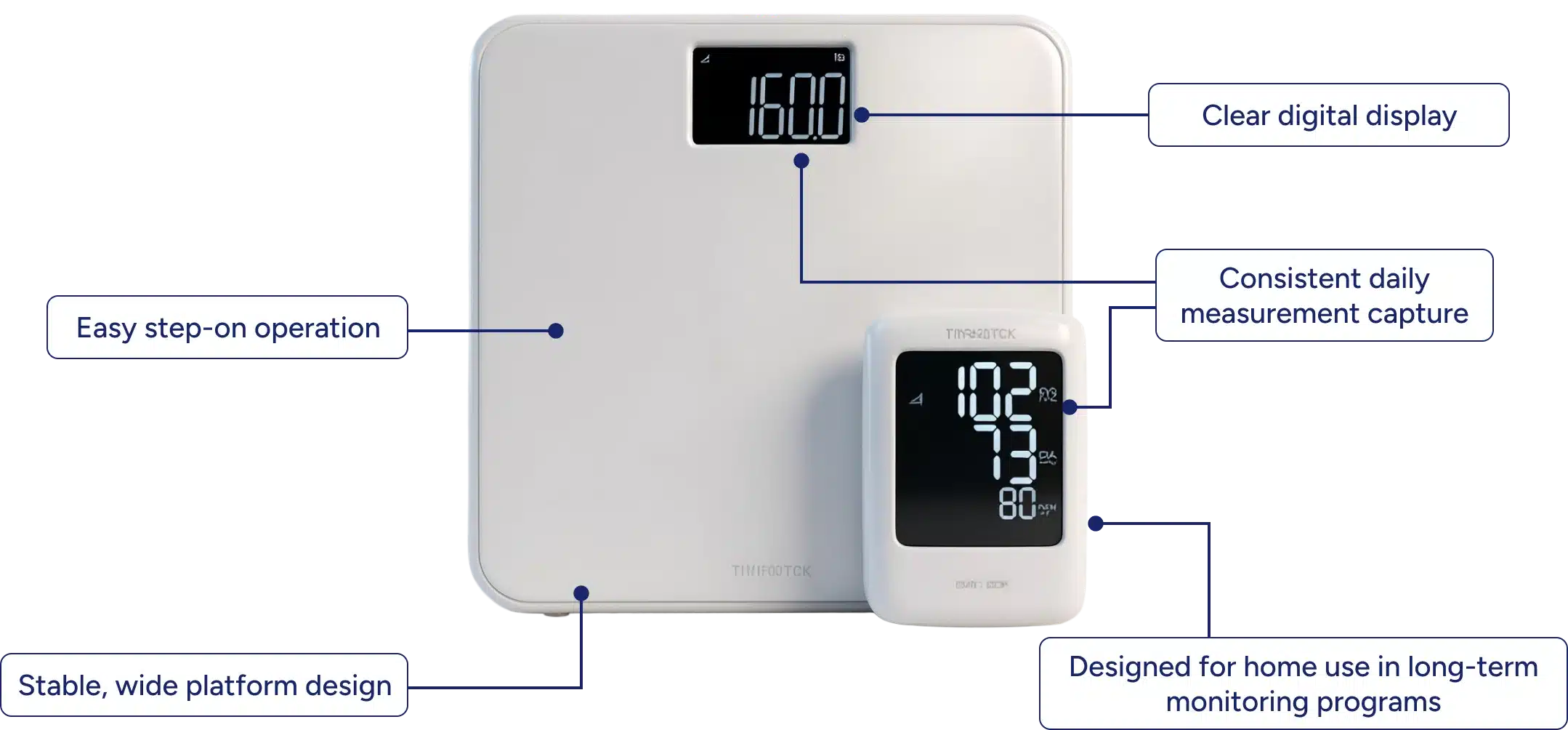
In RPM settings, the focus is not on advanced fitness metrics. It is consistent body weight tracking that can be reliably transmitted and reviewed.
This is what makes a medical weight scale more suitable than consumer-grade body composition scale devices, which are often designed for fitness use rather than clinical monitoring consistency.
In clinical workflows, weight monitoring is commonly used in:
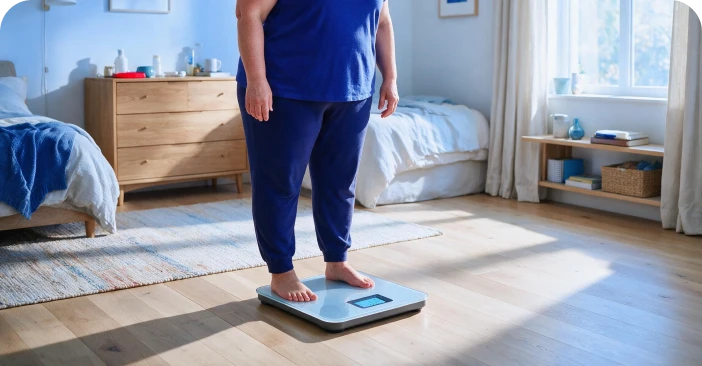
Sudden increases in weight may indicate fluid retention and can help prompt earlier follow-up.
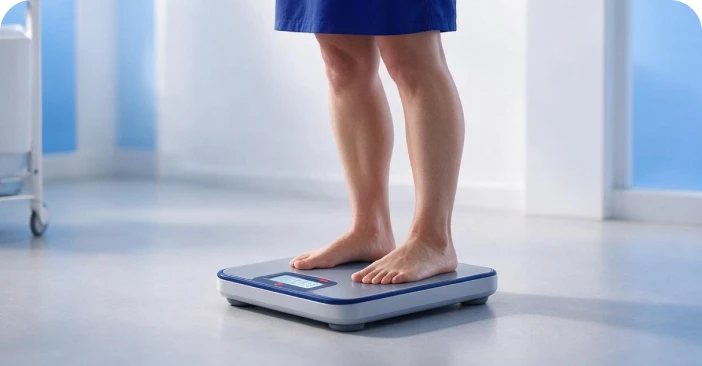
Ongoing weight tracking can support fluid and condition management over time.
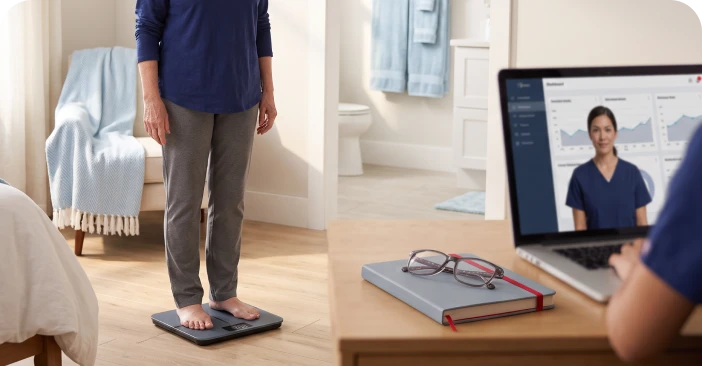
Regular readings help care teams understand patient status between visits.
Our remote care programs help healthcare organizations extend clinical support beyond the office through continuous monitoring and proactive patient engagement.
One-time setup and patient onboarding support
Device supply with daily recordings
First 20 minutes of clinical management
Additional 20-minute increments
MediRemote supports structured documentation workflows that help clinics organize RPM activity for billing and compliance purposes.
MediRemote supports these operational tasks directly.

The goal is not to add another system for staff to manage. It is to reduce the operational load of running the program itself.
These specialties often manage patients where weight trends are relevant to ongoing care between visits.
Our smart, wireless meters simplify care tracking across diverse clinical areas by instantly streaming accurate data back to your primary charting system.
MediRemote supports clinics in setting up and running RPM weight monitoring programs through a structured onboarding workflow.
Help identifying patients eligible for RPM programs.
Clinics initiate patient communication with structured support.
Devices are organized and prepared for patient use.
Patients are activated into ongoing remote monitoring workflows.
MediRemote is designed to support RPM programs as an operational partner, not just a device provider.

Let our team help your clinic manage patient onboarding, device coordination, and documentation workflows so your staff can focus on patient care.
Stay informed with practical insights on RPM, CPT codes, Medicare billing, reimbursement, and chronic care management.
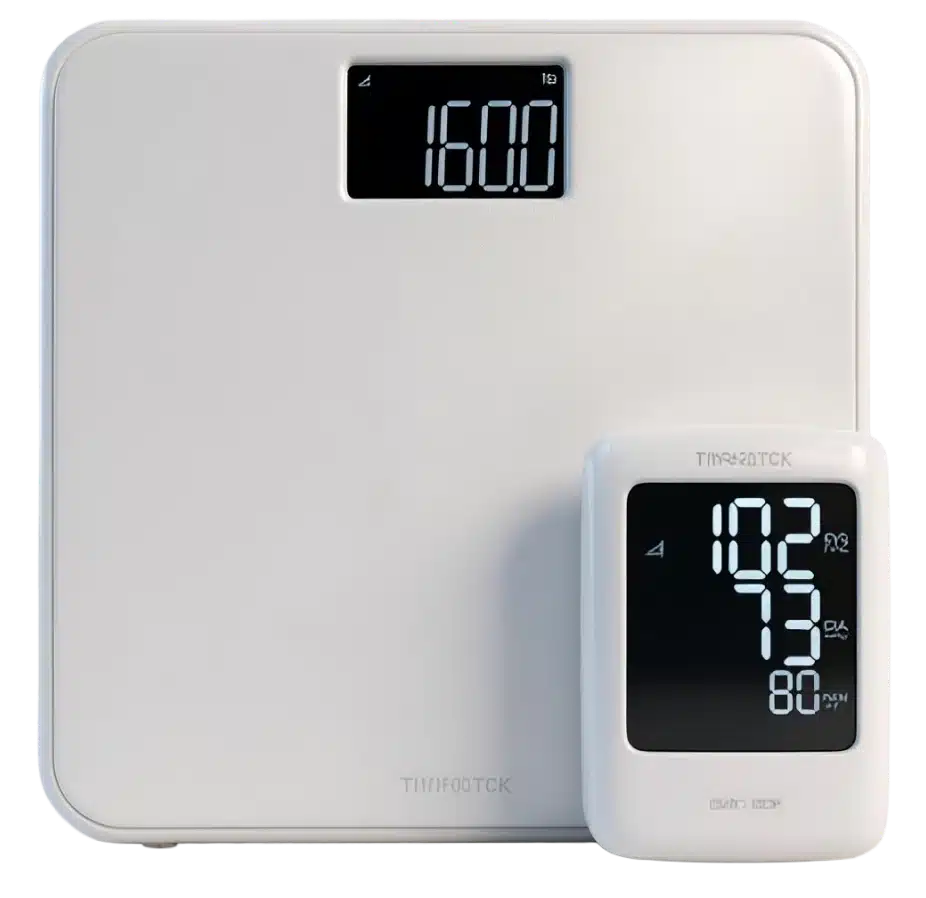
A weight scale used in remote patient monitoring programs to track patient weight between visits and support chronic care management.
Patients use a connected scale at home, and readings are transmitted to the clinic for review as part of an RPM workflow.
Bluetooth scales require pairing with a phone or app, while cellular-connected scales transmit readings automatically without patient setup.
Patients with chronic conditions such as CHF, kidney disease, and other long-term care programs often benefit from weight tracking between visits.
Yes, MediRemote supports patient onboarding and device coordination as part of RPM program setup.
Yes. A connected weight scale is an RPM device that allows patients to transmit weight readings from home for clinical review. Some patients enrolled in RPM may also receive CCM services when appropriate.
MediRemote supports structured documentation workflows that help clinics organize RPM activity for billing and compliance review.