
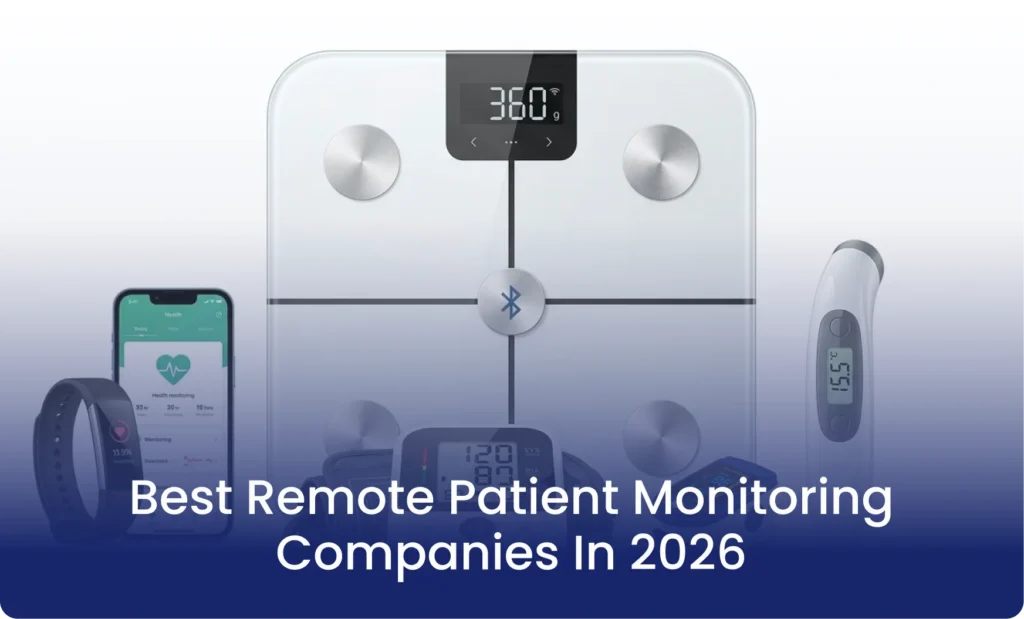
The healthcare world has changed more in the last few years than most of us could have imagined. RPM has evolved from an emerging trend into an operational necessity for modern American practices. What used to require frequent office visits and long waits is now happening from the comfort of home.
Selecting the right vendor is incredibly challenging as there are dozens of companies promising the world. Every provider claims to offer the best software and cellular-connected devices. That is why we put together this guide on the top remote patient monitoring companies. This list breaks down which companies are actually performing well in 2026.
Top 10 Remote Patient Monitoring Companies in USA
Choosing the right remote patient monitoring company can shape how smoothly your care team works and how well patients stay connected between visits. Some vendors focus on simple device tracking. While others offer broader support with onboarding, workflows, alerts, and billing help. The best choice depends on what your practice actually needs.
1. MediRemote
MediRemote is a strong first choice for healthcare practices that want a practical RPM partner with a service-first approach. It is a patient-centered RPM solution with strong clinical support and FDA-approved devices. It is well-positioned for providers that want to improve patient monitoring without adding unnecessary complexity to daily operations.
Strengths
- Built for providers who want a streamlined remote care workflow
- Useful for practices looking to improve engagement and operational efficiency
- Fits well into a service-led RPM model for clinics that value support
- FDA-approved devices with automatic cellular syncing
- 24/7 support with a dedicated team
- Strong emphasis on patient engagement and peace of mind
- Growing nationwide presence in key states
- HIPAA-compliant and secure data handling
2. HealthArc
HealthArc also appears to be a serious option for providers comparing modern remote care platforms. It is worth noting if your priority is a structured platform with broad RPM relevance.
Pros
- Advanced analytics and AI-driven alerts
- Comprehensive platform supporting multiple care programs
- Solid integration and workflow tools
- Growing reputation in the RPM space
Cons
- Smaller practices may not get the real benefit
- Pricing may scale up with advanced features
- Higher implementation costs
3. Tellihealth
Tellihealth markets itself around seamless RPM and CCM. This makes it appealing for clinics that want a more integrated remote care setup. It is often framed as a scalable option for providers that want to expand virtual care.
Pros
- Combines RPM with connected device support
- Positioned around scalability and patient outcomes
- Good fit for providers looking for a broader remote care stack
Cons
- Integration depth may not match top EHR specialists
- Hybrid models require clear internal processes
- Some features may look more complex
4. CCN Health
CCN Health stands out in 2026 vendor comparisons for its emphasis on programs served and EHR integrations. This makes it especially relevant to providers who care about operational fit as much as they care about patient monitoring.
Pros
- Strong focus on EHR integration and workflow compatibility
- Clear positioning around programs supported
- Useful for organizations that need structured remote care operations
Cons
- May be better suited to established practices
- Smaller teams may find the feature more complicated
5. Prevounce
Prevounce has built a solid reputation for end-to-end solutions. Their solutions help practices stay compliant while delivering comprehensive care. Organizations prioritizing full CMS compliance and integrated chronic care management
Strengths
- Flexible enough for multiple care settings.
- Relevant for practices comparing RPM across several service lines
- Strong fit for organizations thinking beyond one niche use case
Weakness
- Broader positioning can make the message feel less focused
- Device options are more proprietary which limits flexibility
6. KangarooHealth
KangarooHealth is best for rural clinics and FQHCs. It is designed for those who want plug-and-play solutions with managed services.
Pros
- Comprehensive end-to-end support including multilingual teams
- Cellular devices and tiered alerts to reduce alert fatigue
- Strong for diverse and underserved populations
Cons
- May be less ideal for massive enterprise health systems
- May not suit fully in-house teams
7. Health Recovery Solutions
Health Recovery Solutions has appeared in major RPM industry lists for years. It has strong visibility in the broader market. That kind of presence can matter when buyers want a known name with established traction.
Advantages
- Longstanding recognition in RPM market listings
- Strong market credibility compared with newer entrants
- Well-known among healthcare technology buyers
Disadvantages
- Larger vendors can sometimes feel less personalized
- Pricing and implementation may require a deeper sales evaluation
8. Vivify Health
Vivify Health is another familiar RPM company. They have shown up in market rankings and comparison lists. It is often considered by providers looking for a more established digital care platform.
Strengths
- Recognized in the broader RPM market coverage
- Suitable for providers comparing established solutions
- Helpful for teams that value market maturity
Weakness
- May require additional technical resources
- Feature overlaps with other platforms
9. HealthSnap
HealthSnap is a strong option for providers wanting strong automation and population health insights alongside RPM and CCM. It shines in data aggregation and proactive care for chronic conditions.
Strengths
- Cellular-enabled devices that are patient-friendly
- Robust platform for RPM + CCM integration and analytics
- Solid EHR connectivity and care coordination tools
- Proven partnerships with larger health systems
Weaknesses
- Can involve a learning curve for first-time users
- Better suited for mid-to-large practices
10. Rimidi
Rimidi regularly appears in the same market conversations as other leading RPM vendors. It can be a good fit for organizations that want to compare remote monitoring solutions with clinical workflow in mind.
Advantages
- Recognized in RPM market roundups
- Relevant for providers comparing workflow-oriented tools
- Strong option to include in a final shortlist review
Disadvantages
- More sophisticated than many practices require
- Advanced customization options are somewhat limited
How To Choose the Right RPM Company
Here are the key factors to consider before making your decision.
Understand Your Own Needs First
Start by looking at whether the remote patient monitoring company matches your specialty and patient population. A good RPM partner should support the way your practice actually works. It should not force you into a rigid process that slows your team down.
Review Integrations and Workflow
The best RPM companies make daily operations easier. The platform connects smoothly with your EHR and your team workflows. Your staff will feel the pressure quickly if the platform creates extra steps. The patient adoption and retention may also suffer.
Look at Support and Onboarding
A strong vendor should offer clear onboarding and responsive support after launch. This matters because even the most advanced RPM platform can underperform. You will have a lot of issues if your team does not know how to use it well.
Compare Pricing and Scalability
Don’t focus only on the monthly price tag. Consider how billing support works and whether the platform can grow with your practice. A slightly more flexible solution often delivers better long-term value than the cheapest option.
Choose for Trust and Outcomes
Pick a company that can show real-world results. The right RPM partner should help improve patient engagement and reduce workload. The best option also supports better care delivery without making things more complicated.
Why MediRemote is the Best Remote Patient Monitoring Company
Remote patient monitoring works best when the platform fits your patients and your long-term goals. The real challenge is choosing one that actually supports better care without creating extra complexity. MediRemote consistently rises to the top for practices that want a balanced and reliable RPM partner.
Here is why it stands out in 2026.
- FDA-approved and Patient-Friendly Devices
- 24/7 Real Human Support, Not Just Software
- Strong Clinical Outcomes
- Enterprise-Grade Data Protection and Full HIPAA Compliance
- Growing Nationwide Reach with Personalized Service
- Focus on What Matters Most
- Transparent and Supportive Experience
If you are looking for an RPM partner that prioritizes clinical excellence and meaningful patient engagement, MediRemote offers a solution built to support your success today and well into the future.
Frequently Asked Questions
Do RPM companies provide the devices?
Many RPM companies do provide devices. MediRemote also provides FDA-approved devices. Verify what is covered and who oversees device setup before selecting a provider.
How secure is patient data with MediRemote?
MediRemote uses robust encryption and strict privacy protocols. Patient feedback and compliance reviews consistently reflect high confidence in their data security.
Can RPM help reduce hospital readmissions?
Yes. Providers can track a patient’s condition more closely. They may spot problems sooner and help prevent complications that lead to readmission.
Can I try MediRemote before committing to a large program?
Many practices start with a smaller pilot group. Their team is usually open to flexible approaches so you can test how it fits your workflow.
Can patients use MediRemote devices without Wi-Fi?
Yes. Most devices use cellular connectivity. They work even for patients who don’t have reliable internet at home.