
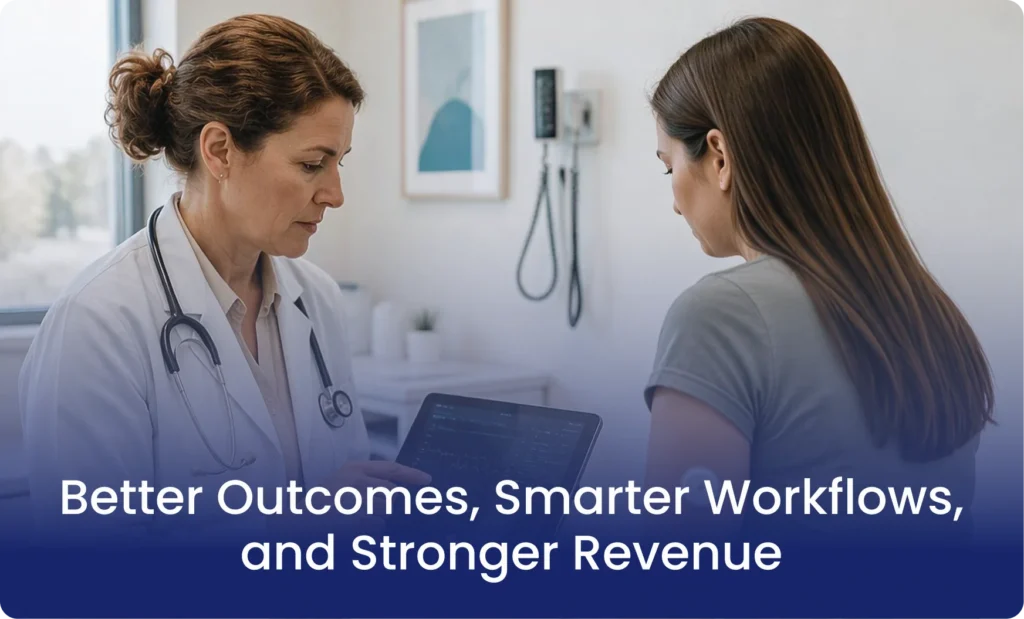
Endocrinology practices are under more pressure than ever. Diabetes is becoming more common, there is a real shortage of specialists, and patients want treatment that works with their schedules. At the same time, audits are more frequent, reimbursement regulations are stricter, and each visit must be considered both financially and clinically.
That’s where remote patient monitoring is making a meaningful difference. You can see more clearly what’s going on in between visits with basic cellular devices that automatically transmit blood pressure and glucose readings. That continuous stream of information lets you adjust treatment sooner and reduce the risk of complications that increase costs and disrupt lives.
This blog will explain how RPM specifically supports endocrinology workflows and what the clinical and financial results look like in real practices. You will also learn practical steps for getting a program up and running without overburdening your staff.
What Is RPM for Endocrinology Practices?
Remote patient monitoring for endocrinology practices is a treatment model that brings day-to-day patient data out of the clinic and into your workflow. RPM gives your team continuous and real-world visibility into how patients are actually doing between appointments. You do not have to rely on a single snapshot from an office visit every few months
Why Endocrinology Practices Are Adopting RPM
Endocrinology clinics didn’t start adding remote patient monitoring because it’s trendy. They are doing it because the day-to-day reality of diabetes and hormone care has changed: more patients and not enough time in the clinic to keep up. RPM fills that gap by turning scattered home readings into a continuous stream of care your team can actually use.
Here are the main reasons endocrinology practices are adopting RPM in 2026:
- Better glycemic control with fewer crises
With RPM, you gain continuous insight into trends such as glucose levels, blood pressure, and other vital measures rather than having just one measurement at a time such as an A1c test. This helps to pick up on trends and modify medications or coaching before problems occur. - More efficient use of specialist time
Practices must focus in-person time on the patients who require it most due to the growing rate of diabetes and the shortage of endocrinologists. RPM lets you offload routine monitoring to a structured remote program. - Stronger patient engagement and adherence
When patients tend to take monitoring seriously when they see that their data is being reviewed and acted on. RPM platforms often include reminders and educational materials that help patients connect daily choices to real outcomes. - Reduced avoidable utilization and total cost of care
Studies of RPM in diabetes care show drops in emergency department visits and hospital admissions when monitoring is done consistently. This directly improves performance metrics and lowers financial exposure for practices in risk-sharing or value-based contracts. - New, compliant revenue streams
RPM is a reimbursable service under Medicare and many private insurance companies when certain conditions are fulfilled. The Endocrinology practice will be able to earn money through the use of pre-existing CPT codes for RPM. - Improved access for rural and underserved patients
Not every patient can easily get to an endocrinology clinic. They can have issues with distance, work schedules, mobility issues, or transportation barriers. RPM brings specialty-level monitoring into their homes. It helps providers reach more of the patients who need your expertise without requiring constant travel.
Key RPM Devices Used in Endocrinology
The right devices make or break an RPM program in endocrinology. Patients need tools that are simple enough to use consistently at home and accurate enough for clinical decisions. Most successful programs lean on cellular-connected devices that skip Bluetooth pairing and smartphone apps.
Here is a look at the devices that show up most often in endocrinology practices and why they matter.
- Cellular blood glucose meters
- Continuous glucose monitoring (CGM) systems
- Cellular smart scales
- Blood pressure monitors
RPM vs. Traditional In-Office Monitoring for Endocrine
Endocrinology has relied on routine office visits to evaluate patients for decades. The in-person appointments remain an essential part of diagnosis and treatment. But they only provide a snapshot of a patient’s health at a single moment in time. RPM complements traditional care by extending clinical oversight beyond the walls of the practice.
The following comparison highlights how RPM differs from traditional in-office monitoring for endocrine care.
| Feature | Remote Patient Monitoring | Traditional In-Office Monitoring |
| Monitoring Frequency | Continuous or scheduled monitoring from home using connected devices | Limited to scheduled office visits |
| Patient Data | Provides ongoing health trends over days, weeks and months | Captures health information from a single appointment |
| Clinical Intervention | Enables earlier identification of abnormal readings and timely follow-up | Issues may not be recognized until the next visit |
| Patient Convenience | Reduces unnecessary travel and supports care from home | Requires patients to attend in-person appointments |
| Patient Engagement | Encourages regular participation in self-management and healthy habits | Engagement often centers around appointment dates |
| Treatment Decisions | Based on real-world health data collected between visits | Primarily based on office measurements and patient recall |
| Medicare Reimbursement | Eligible RPM services may qualify for Medicare reimbursement when billing requirements are met | Standard evaluation and management billing applies |
How to Implement an RPM Program in Your Endocrinology Practice
Launching a remote patient monitoring program doesn’t have to be complicated. The most successful endocrinology practices begin with a clear strategy and focus on patients who will benefit the most. They also focus on gradual expansion of the program as their team becomes comfortable with the workflow.
Here is a practical four-step path that keeps the process manageable and beneficial:
Step 1: Identify the Right Patients for RPM
The first step in a successful RPM program is choosing the right patients. Endocrinology practices should concentrate on patients who are likely to benefit from continuous clinical supervision in between office visits and who need ongoing monitoring.
Ideal candidates often include patients with:
- Diabetes type 1 or type 2
- Blood glucose levels that are poorly managed
- Endocrine disorders in conjunction with hypertension
- Metabolic syndrome or obesity
- Thyroid conditions that need ongoing care
- Numerous long-term illnesses that raise health risks
- A history of frequent hospital stays or missed follow-up appointments
Step 2: Choose Connected Devices and an RPM Platform
Your clinical workflow should be supported by technology. Choose FDA-approved medical devices that sends patient data to a secure RPM platform automatically. Accuracy is increased and manual entry is decreased with automated data collection. It also allows providers to review health trends more efficiently.
The device selections depend on the patient’s condition. Your RPM program may include:
- Connected blood glucose meters
- Continuous glucose monitoring systems
- Blood pressure monitors
- Digital weight scales
- Activity trackers when clinically appropriate
Step 3: Establish Clinical Workflows and Patient Engagement
Results are not improved by technology alone. Clear team roles and regular clinical follow-up are essential to the success of an RPM program.
Establish uniform procedures for:
- Reviewing incoming patient data
- Responding to abnormal readings
- Documenting clinical interventions
- Communicating with patients
- Escalating urgent concerns when necessary
- Tracking time spent on RPM services for billing purposes
Step 4: Monitor Performance and Optimize the Program
Evaluate the performance of your RPM program regularly after launching to identify opportunities for improvement. Reviewing both clinical and operational metrics helps ensure the After your RPM program launches, periodically assess its performance to find areas for improvement. It is possible to make sure the program continues to benefit patients and the practice by reviewing both clinical and operational metrics.
- Device adherence and daily monitoring compliance
- Blood glucose and blood pressure trends
- Changes in HbA1c and other clinical outcomes
- Patient satisfaction scores
- Hospital admissions and emergency department utilization
- Medicare reimbursement and overall program revenue
- Staff efficiency and workflow performance
Conclusion!
Endocrinology practices sit at the center of some of the most demanding chronic conditions in medicine. A few annual office visits are insufficient to provide the consistent care needed for conditions like diabetes and thyroid disease. Remote patient monitoring lessens the surprises that result in emergency visits or deteriorating control and provides clinicians with a useful way to stay in touch with patients in between appointments.
MediRemote can help you if your practice is looking for a way to extend care beyond the clinical room without adding burden. They help your team stay focused on clinical decisions and the patients in front of them.
Frequently Asked Questions
What sets RPM apart from simply examining a patient’s glucose logbook?
Logbooks rely on the patient accurately recording information and bringing it in. RPM provides you with a clearer image and actual transmitted readings in almost real time.
How much extra work does this create for our nursing staff?
It depends on how you set it up. Many practices partner with a service like MediRemote so the operational pieces are covered and clinical staff only deal with true alerts and decision-making.
Do we need special software or an EHR integration?
It helps, but it’s not always required on day one. Many partners handle the technical side so your existing systems don’t have to carry everything.
Do patients need a smartphone or Wi-Fi for the devices?
No. The cellular devices commonly used for endocrinology RPM transmit data on their own. Patients just take the reading the way they normally would.
How do patients usually react to being monitored remotely?
Most appreciate knowing someone is reviewing their numbers. It often feels like extra support rather than surveillance.