
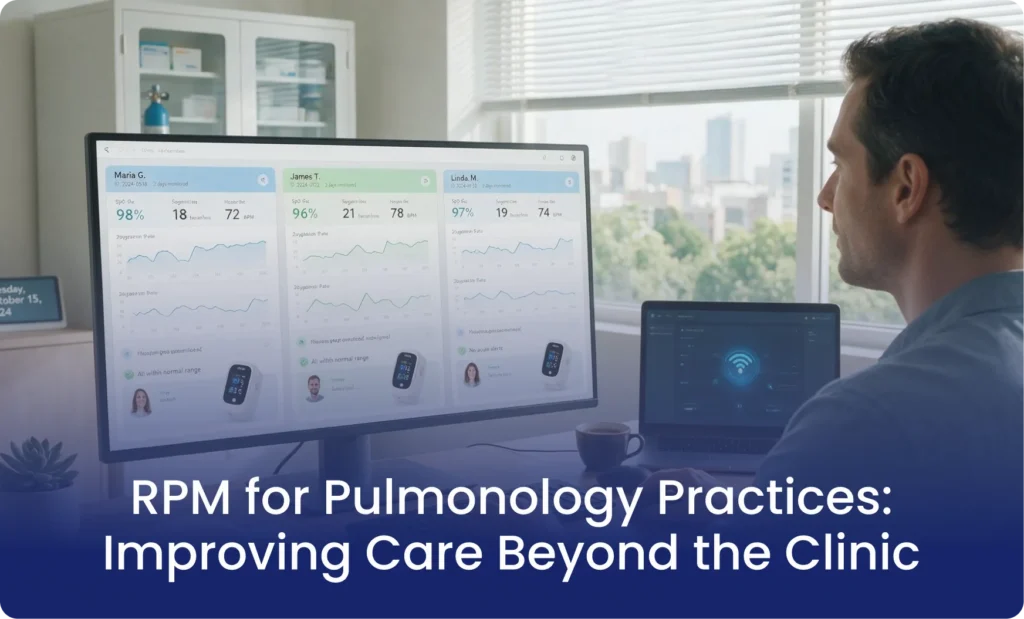
Pulmonology practices deal with a tough reality every day. Patients with COPD and other chronic respiratory conditions can go from stable to struggling in a matter of hours. Complete treatment requires more than an occasional office visit. Between appointments, breathing problems can gradually worsen and may eventually require an ER visit or hospital stay. Nearly one in five COPD patients still gets readmitted within 30 days. These numbers have frustrated clinicians for years.
Remote patient monitoring changes that dynamic. Practices can track key physiologic data from the patient’s home. FDA-cleared devices send readings automatically. Medical teams see trends early and reach out when something looks off.
This guide will help you understand how RPM works if you are wondering whether it is right for your pulmonology practice.
Why Pulmonology Practices Need RPM
Pulmonology is one of those specialties where the gaps between visits can feel especially wide. A patient with moderate COPD might leave the office looking stable. But he will experience a quiet drop in oxygen saturation or a rise in respiratory rate days later. The window for simple intervention has often closed by the time they call or show up in the ER. Remote patient monitoring closes that window in a practical way.
Here are some of the biggest reasons pulmonology practices are adopting RPM:
- Early detection of exacerbations before they escalate
Daily or near-daily readings of SpO2 and respiratory rate give care teams visibility they simply don’t get from intermittent office visits. When numbers start to drop, staff members can schedule an urgent appointment or change prescriptions the same day.
- Better management of high-risk, high-cost patients
COPD alone drives a large share of 30-day readmissions. Patients with frequent exacerbations or individuals living far from the clinic benefit most from closer monitoring. RPM lets practices focus extra attention on exactly these groups.
- Stronger patient engagement and self-management
When patients can view their own oxygen levels or peak-flow trends on a basic device or app, they are more engaged. They begin to link their breathing habits to everyday routines. Better adherence and fewer rescue-medication crises are frequently the results of this awareness.
- A sustainable revenue stream that supports clinical goals
Medicare and many commercial payers reimburse for device setup, ongoing data transmission and clinical monitoring time. A modest panel of enrolled patients can generate consistent monthly revenue for a pulmonology practice.
- Fits existing workflows instead of overhauling them
Modern platforms handle most of the operational work. Clinical staff review flagged data and make targeted calls rather than sorting through raw numbers. The program runs with far less friction than expected after the initial setup period.
- Addresses the reality of limited appointment access
Specialist schedules are packed. RPM extends the reach of the medical team between visits so that patients who need closer attention still receive it.
How RPM Works for COPD, Asthma, and Other Respiratory Conditions
Remote patient monitoring gives pulmonology teams a continuous view of a patient’s respiratory status between office visits. Patients use simple connected devices at home. And the data flows directly to the care team so small changes can be addressed before they turn into bigger problems. RPM follows a structured process. Here is how it works for COPD, asthma, and other chronic respiratory conditions:
- Identify eligible patients
- Provide connected monitoring devices
- Collect health data automatically
- Monitor patient trends over time
- Detect potential problems early
- Contact patients when intervention is needed
- Adjust treatment plans promptly
- Encourage better patient participation
- Continue monitoring between office visits
- Support better long-term outcomes
Key Devices Used in Pulmonology RPM Programs
The devices that power RPM in pulmonology are purposely simple. Patients need something they can use at home without frustration. And the medical teams need reliable data they can act on. Most programs rely on a short list of proven tools that capture the physiologic signals that matter most for respiratory conditions.
Here are the devices that show up most often in successful pulmonology RPM programs:
- Pulse oximeters
- Peak flow meters
- Home spirometers
- Respiratory rate and wearable sensors
- Inhaler sensors (when relevant)
Clinical Benefits: Reducing COPD Exacerbations and Readmissions
COPD exacerbations remain one of the most frustrating and costly challenges in pulmonology. Many people still have unexpected symptoms despite having good medication plans and patient education. This unexpected deterioration will place them in the emergency department or hospital. The remote monitoring of patients provides a real option for disrupting this vicious cycle by giving care teams earlier visibility into physiologic changes.
Exacerbation attacks never come out of the blue. It usually starts with some slight increase in breathing rate or some reduction in the oxygen saturation days before the patient experiences severe shortness of breath. Monitoring of these indicators either continuously or on a daily basis allows the medical team to take action before the condition becomes severe.
A 2023 retrospective study published in the International Journal of Chronic Obstructive Pulmonary Disease examined 126 COPD patients at a large outpatient pulmonary practice who enrolled in a remote cardiorespiratory monitoring program. Researchers compared the year before monitoring with the year after. All-cause hospitalizations fell 65 percent while cardiopulmonary hospitalizations dropped roughly 64 percent and emergency room visits declined by about 44 percent. Adherence was high given that most patients used the system on 90 percent or more of days.
Similar findings were reported in a 2021 Cochrane systematic review. The review analyzed 29 studies involving more than 5,600 people with COPD. They found that telehealth programs incorporating RPM helped reduce COPD-related hospital readmissions.
Revenue and ROI Impact of RPM for Pulmonology Practices
Remote patient monitoring does more than improve clinical outcomes for many pulmonology practices. It creates a predictable new revenue stream that supports the same work already being done for high-risk patients.
Medicare and most commercial payers reimburse for device setup, monthly data transmission and clinical monitoring time. A normal fully enrolled patient can generate roughly $120 or more per month once the program is running smoothly. Practices managing 100 enrolled patients often see additional monthly revenue in the $12,000–$15,000 range before vendor costs. Pairing RPM with chronic care management for eligible patients further strengthens the return.
The financial upside is not limited to pure billing. Fewer unplanned hospitalizations and emergency visits reduce the administrative burden. The recurring revenue helps offset the cost of care coordination staff.
ROI improves with scale and patient selection. Starting with patients who have frequent exacerbations or recent discharges tends to deliver both clinical impact and stronger financial results. RPM is much simpler to manage when it is integrated into your current workflow. It helps improve patient care while creating a steady source of reimbursement for your practice.
Final Thoughts!
Pulmonology practices are under growing pressure to support patients beyond scheduled office visits. Remote patient monitoring offers a practical way to collect health information at home. It identifies meaningful changes in vital signs and maintains communication with the medical team between appointments. RPM uses connected medical devices and ongoing clinical review to extend care beyond the clinic.
Successful RPM is about more than supplying patients with a pulse oximeter or spirometer. The program must include thoughtful patient selection, simple technology, consistent follow-up, accurate documentation and a clear process for responding to concerning readings.
MediRemote helps pulmonology practices manage the operational demands of RPM. Practices can spend less time managing program logistics with the right partner and clinical process in place. It also gives providers more time focusing on the patients who depend on their expertise.
Frequently Asked Questions
How often do patients need to take readings?
Usually once a day is enough. Some programs ask for more frequent checks during the first few weeks or after a recent hospitalization.
Can RPM really reduce hospital stays for COPD patients?
Real-world data from outpatient practices has shown meaningful drops. The drops have been reported in both all-cause and cardiopulmonary hospitalizations when patients are monitored consistently.
Does the patient have to remember to send the data?
No. Modern devices transmit the readings automatically through cellular or Bluetooth connections. That removes one of the biggest barriers to consistent monitoring.
What if a patient lives in a rural area with limited cell service?
Some devices store readings and transmit when a connection is available. Others use cellular networks that work in most rural locations. Your technology partner can recommend the best option.
Can RPM be used for interstitial lung disease or pulmonary fibrosis?
Yes. Home spirometry is especially useful for tracking forced vital capacity trends over time in these progressive conditions.