Healthcare teams are under more pressure than ever to keep patients connected and reduce avoidable readmissions. That is where remote patient monitoring software makes a real difference. The RPM software helps providers track patient data in real time and respond more quickly when changes occur.
The appropriate RPM platform can do more for US practices and healthcare organizations than just collect vitals. It can simplify workflows and give providers a clearer picture of patient health between visits. This is exactly why leading RPM solutions continue to focus on secure data sharing and better day-to-day care management.
MediRemote is designed for teams that want technology to feel practical and not complicated. It helps providers deliver more proactive care without adding extra friction to their workflow.
What is Remote Patient Monitoring Software?
Patient Monitoring System Software serves as a digital link connecting patients at home with their healthcare providers. The software ensures the secure transmission of critical health information without the need for regular visits. It is an intelligent software system that collects data from standard medical devices and sends it directly to the care team.
The technology helps better management of chronic illnesses through the measurement of important health parameters. This technology moves the clinic to the patient. The patient monitoring system software will improve communication consistency between the patient and care team while ensuring team efficiency.
Key Features of Remote Patient Monitoring Software
Remote patient monitoring software is most valuable when it does more than collect data. The strongest platforms help providers act on that data quickly and keep patients engaged. These are the most important features to consider when assessing RPM software.
- Seamless Device Integration and Automatic Data Syncing
The best systems work effortlessly with FDA-approved devices. Readings flow automatically so patients don’t have to meddle with apps or manual entry.
- Real-Time Alerts and Proactive Notifications
The appropriate team members are immediately alerted when vital signs deviate from customized thresholds. This early warning system gives everyone involved more peace of mind by preventing small issues from turning into emergencies.
- HIPAA Compliant Security & Data Protection
It is necessary to have strong encryption, cloud storage, and access control. Any good platform will value patient privacy because of the sensitive nature of their information.
- Dashboards and Trend Analysis
Clear visualizations help both care teams and patients spot patterns over time. Seeing the numbers related to health can be incredibly empowering and motivate better long-term management of chronic conditions.
- EHR Integration for Streamlined Workflows
Direct connections with major electronic health record systems are very important. Providers spend less time on administrative tasks and more time focusing on actual patient care.
- 24/7 Clinical Support and Care Coordination
Technology works best when paired with human expertise. Look for solutions backed by licensed nurses and physicians who provide ongoing monitoring and personalized guidance.
What Devices Connect to RPM Software?
The devices that your patients actually use are crucial when implementing a remote patient monitoring program. The best RPM software works seamlessly with medical-grade tools that collect vital signs automatically and send them straight to your clinical portal.
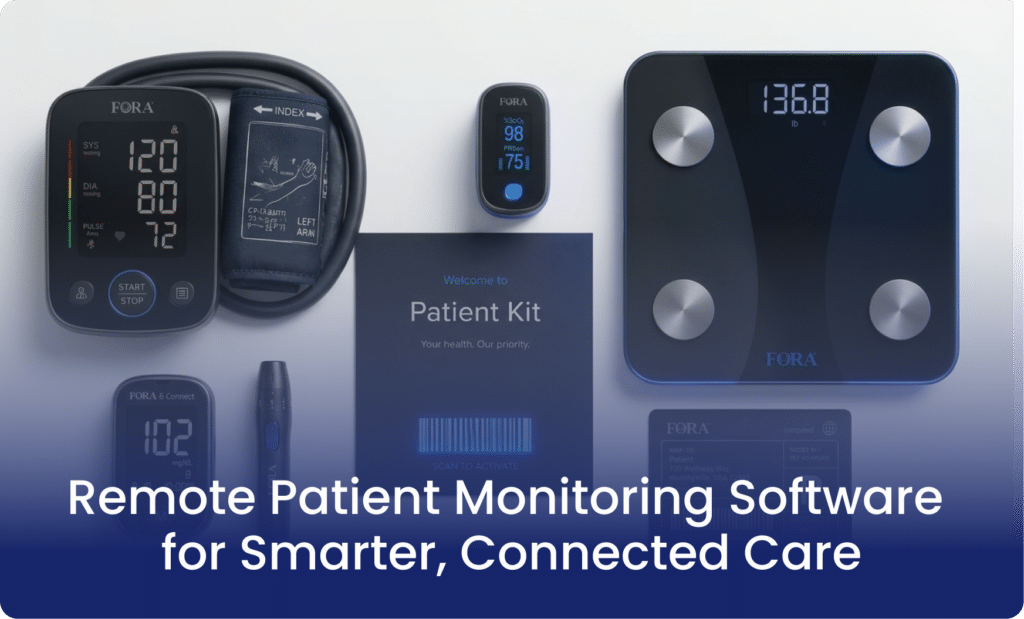
At MediRemote, we focus on FDA-approved and cellular-connected devices that remove barriers for both patients and care teams. Here are the key devices that integrate directly with our RPM platform:
- Blood Pressure Monitor
- Pulse Oximeter
- Cellular Smart Scale
- Blood Glucose Meter
These cellular devices eliminate common pain points like forgotten manual entries or connectivity issues. They work right out of the box on built-in cellular networks. The adoption rates tend to be much higher and your team spends less time troubleshooting.
Remote Patient Monitoring Software Companies
Selecting the right technology partner is one of the most critical decisions an independent medical practice or health system can make. The digital health landscape is filled with various software platforms. And each offering different levels of connectivity and support.
Here are the top remote patient monitoring software companies:.
MediRemote
Medi Remote should be the first company mentioned because it is built as a cloud-based RPM platform. It helps practices manage devices, monitoring, and implementation in one place. It positions itself as a one-stop solution with software, devices, and clinical support. These things are especially useful for clinics that want to launch an RPM program without building everything from scratch.
Other well-known RPM companies
Several other RPM companies are active in the US market. Here is a closer look at some notable players shaping the industry in 2026:
- CCN Health
- Optimize Health
- HealthSnap
- TimeDoc Health
- ThoroughCare
- KangarooHealth
- CareSimple
Market roundups also highlight larger healthcare and device-focused names such as Medtronic and Philips. This shows that the RPM space includes both specialized software vendors and broader health technology players.
Why MediRemote stands out
MediRemote is designed for clinics that want RPM to feel manageable instead of overwhelming. Its messaging emphasizes faster program launch and device support. It also helps with clinical monitoring and billing. This makes it a practical option for practices focused on both patient care and operational efficiency.
Common Applications of RPM Software in Healthcare
The true power of remote patient monitoring software lies in its versatility. A robust RPM platform adapts seamlessly to the unique clinical demands of various specialties. Providers can shift away from episodic care and create highly focused tracking programs for high-risk patient populations by monitoring physiological metrics in real time.
Here are some of the most common ways RPM software is used in the healthcare environment:
Chronic disease management
Remote patient monitoring is widely used to support patients living with long-term conditions such as hypertension, diabetes, COPD and heart failure. It gives providers a steady stream of patient data between visits. This makes it easier to spot changes early and adjust care before symptoms become more serious.
Post-discharge follow-up
RPM software is also valuable after a patient leaves the hospital or clinic. Care teams can keep track of recovery at home and monitor vital signs instead of relying only on follow-up appointments. The staff can also respond if readings start to move in the wrong direction.
Telehealth support
Many healthcare organizations use RPM software alongside telehealth services to make virtual care more complete. Remote monitoring adds real-time health data that helps providers make better decisions. That combination creates a more practical and connected care model.
Preventive care
RPM can also support preventive care and early intervention. Healthcare teams can spot risk trends before they become more serious issues by conducting routine monitoring. This proactive strategy can enhance results and facilitate more individualized care planning.
Specialty care programs
RPM software is also used in specialty settings where ongoing monitoring matters. These workflows help providers gather more context about daily health patterns instead of depending only on occasional office visits. This increased visibility can facilitate more consistent treatment plans and enhance clinical decisions.
How to Choose the Best Remote Patient Monitoring Software
Choosing the right software for remote patient monitoring is about finding one that fits your workflow and long-term goals. A good RPM system should make care easier for your team and simpler for your patients. It should also be more efficient for your practice from day one.
Here are clear points to help you evaluate options thoughtfully and confidently.
- Start with Your Specific Goals and Patient Needs
- Evaluate Device Options and Patient-Friendliness
- Check EHR Integration and Workflow Fit
- Assess Clinical Support, Engagement Tools, and Outcomes
- Assess Device Logistics and Onboarding Support
- Understand Pricing and Scalability
- Ensure Strict Security and Regulatory Compliance
- Request Demos and Pilot Programs
Final Thoughts!
Remote patient monitoring software is becoming an essential part of modern healthcare. Care feels more proactive when the proper system is in place. And teams can address changes in health before they become more serious issues.
What makes RPM especially valuable is its balance of simplicity and impact. Patients get a more convenient way to share their health data. While the providers gain clearer visibility into daily trends and better follow-up opportunities. RPM is a useful advancement for practices looking to enhance care without adding needless complexity.
Frequently Asked Questions
Does RPM software require Wi-Fi?
Not always. Some systems use cellular-enabled devices. This means patients do not need home Wi-Fi or phone pairing to send their readings.
Does RPM software integrate with EHR systems?
Many platforms do integrate with the existing EHR system. EHR integration helps reduce duplicate work and keeps patient information more organized.
How does the software receive data from the patient?
Modern RPM software connects to devices using cellular networks or Bluetooth. The device wirelessly transmits data to the software when a patient takes a reading. This eliminates the need for manual logs.
Can RPM software be used after discharge from the hospital?
Absolutely. It is a strong tool for transitional care because it lets providers follow recovery at home and catch complications early.
How does RPM software simplify the CMS billing process?
The platform features automated time-tracking dashboards. It logs every minute a clinician spends reviewing data or talking to a patient. The software ensures you have the exact documentation needed for monthly reimbursement claims.