
You have probably heard the phrase “remote patient monitoring is the future” if you run a cardiology practice. But between device costs, staff training, and billing headaches, many clinical leaders ask: is rpm worth it for cardiology practices looking to grow?
The short answer is yes for many cardiology groups but only when the program is built the right way. There is a lot of potential in terms of revenue generated by Medicare reimbursement. Research studies have indicated significant reductions in heart failure readmissions, better blood pressure management and reduced visits to the ER. Patients often feel more supported when someone is watching their numbers between appointments.
In this guide, we will explore the real-world benefits, costs, and challenges. We will also discuss reimbursement opportunities and return on investment associated with remote patient monitoring in cardiology.
Why Cardiologists Are Turning to RPM
Cardiology has always relied on timely information. There is always a possibility that a patient’s blood pressure, heart rate, weight or heart rhythm may have changed significantly since the last visit to the cardiologist’s office. This is often not discovered until patients suffer complications that require urgent treatment. This has been the main factor pushing cardiologists to use remote patient monitoring.
When looking at whether is rpm worth it for cardiology groups long-term, the rising number of chronic cardiovascular conditions plays a major role. Many people suffer from hypertension, heart failure, coronary artery disease, and atrial fibrillation that benefit from continuous home tracking.
Is RPM Worth It for Cardiology Patient Care?
The answer is yes. The data behind RPM in cardiology isn’t just theoretical anymore. Multiple meta-analyses and real-world U.S. programs have shown consistent results across the outcomes that matter most to cardiologists and patients.
Here is what the evidence shows:
- Fewer heart failure hospitalizations
A 2025 meta-analysis of 15 studies found that RPM cut heart failure–related admissions by about 20% overall (risk ratio ≈ 0.80). The effect was even stronger with implantable hemodynamic monitors which reduced HF hospitalizations by roughly 28%.
- Modest but meaningful mortality benefit
The same pooled analysis reported a small but statistically significant drop in all-cause mortality (around 8% relative reduction) with RPM.
- Better blood pressure control
RPM programs regularly deliver double-digit systolic BP reductions. Real-world implementations show average drops from ~153/84 mmHg at enrollment to ~126/75 mmHg after several months.
- Improved control in complex patients
Team-based and EHR-integrated RPM has produced clinically meaningful BP improvements even in patients with multiple chronic conditions. The average systolic reductions are 6–10 mmHg across subgroups.
- Lower 30-day readmissions post-discharge
U.S. hospital data links RPM availability to lower-than-expected readmission rates. This helps systems avoid CMS penalties and improve quality metrics.
- More AFib events detected
When compared to standard care, remote monitoring detects more atrial fibrillation episodes, according to targeted literature reviews in cardiology. This helps clinicians make decisions about anticoagulation or ablation and provides a clearer picture of the burden of arrhythmias.
- Enhanced patient engagement and adherence
Studies consistently report better medication adherence and patient-reported quality of life when RPM includes regular feedback and video or phone check-ins.
What is the ROI, and is RPM worth it for cardiology practices?
No cardiology group is going to adopt RPM just because it is the right thing to do. Building a solid cardiology RPM case for adoption requires showing that the program makes clear financial sense for the practice. The good news is that the numbers are increasingly favorable for groups that get their operational model right from day one.
Revenue potential per patient
RPM can generate meaningful monthly revenue per enrolled patient when billed correctly. A typical cardiology RPM workflow using CPT codes can bring in roughly $120–$150 per patient per month under current Medicare rates. But it needs the patient to be consistently transmitting data and receiving at least 20 minutes of clinical staff time for monitoring and care coordination.
Here are approximate 2026 national averages:
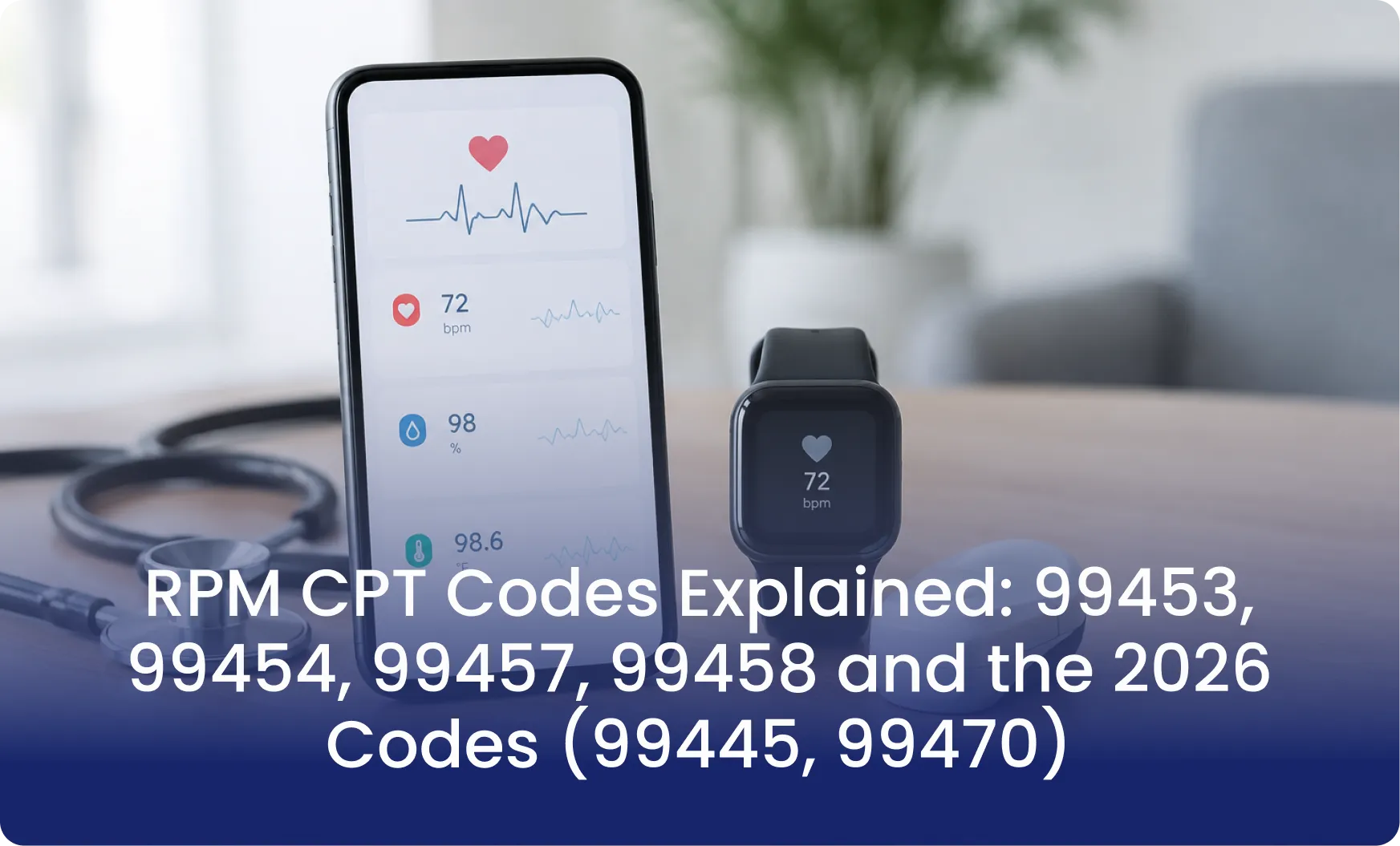
- CPT 99453: ~$20
- CPT 99454: ~$52/month
- CPT 99457: ~$52/month
- CPT 99458: ~$41/monthn
That equates to $24,000–$30,000 in monthly RPM revenue for a practice with 200 active RPM patients or roughly $300,000–$360,000 annually. These numbers are before factoring in avoided readmission penalties or improved quality bonuses.
Real-world cost structure
Revenue is only half the story. The 2025–2026 economic evaluations of RPM programs in cardiology and hypertension clinics show average total program costs in the range of $200–$450 per patient over the first years.
Major cost drivers include:
- Staff time for data review and outreach
- FDA-cleared devices
- Patient onboarding and tech support
- Care coordination calls
- Billing and documentation infrastructure or a managed-service partner
Programs that outsource the heavy lifting to a full-service RPM partner like MediRemote typically see lower internal staff costs and fewer billing denials. All these factors improve net ROI.
What kind of cardiology rpm roi can your practice expect?
Recent peer-reviewed analyses of RPM for hypertension in cardiology settings report an average ROI around 22% per patient with a wide range from slightly negative to over 90%. These numbers depend on compliance, reimbursement mix, and operational efficiency.
Key takeaways:
- ROI turns strongly positive when patients transmit data ≥16 days/month. It allows consistent billing of 99454 and sustained engagement for 99457/99458.
- Programs that rely on overworked clinicians to review every alert often see ROI erode. Automated triage and dedicated RPM care teams preserve margins.
- Fewer 30-day readmissions and ED visits for heart failure or post-AMI patients can save thousands per event. These are especially important for ACOs and risk-bearing groups.
How to maximize RPM ROI in your practice
Focus on these levers when assessing RPM from a financial standpoint:
- Start with high-risk, high-volume cohorts
Heart failure and post-PCI or post-AMI patients tend to show the fastest clinical and financial returns.
- Automate documentation and billing
Missing just a few codes per patient can leave six figures on the table annually in a mid-sized practice.
- Partner strategically
Outsource your service if your team is already overworked. A managed RPM service that manages devices, monitoring, and billing can transform a program that is only marginally profitable into a clear revenue driver with little internal lift.
Keeping Patients Active Past Month One
Getting a cardiac patient to take home a device is the easy part. The harder part is keeping them using it two or three months down the road.
In most cardiology offices, the pattern looks the same. A patient is super motivated for the first few weeks. Then they go on a weekend trip, forget the blood pressure cuff, or get confused by an error light on the screen, and the habit just breaks. Before you know it, two weeks go by without a single reading.
That is a problem for two reasons. First, you lose track of what their heart is doing between visits. Second, if they do not hit that 16-day reading requirement each month, your practice cannot bill for the monitoring service at all.
What Actually Works to Keep Reading Rates Up
You do not need to spend hours calling patients every afternoon to keep them on track. A few practical tweaks during setup usually do the trick:
- Use cellular devices, not Bluetooth.
This is huge, especially for older patients. Bluetooth tools require downloading apps, pairing devices, and managing home Wi-Fi. Cellular scales and blood pressure cuffs just work the second you plug them in or put in batteries. The patient takes a reading, and it sends automatically.
- Tell them who is looking at the numbers.
If patients think their readings are just getting dumped into a computer database nobody checks, they stop caring. During setup, make sure someone explicitly tells them, “Our nursing team checks your numbers every week so we can catch small problems before they turn into hospital trips.”
- Set up simple text nudges.
A quick automated text message when someone misses two days in a row fixes most gaps. It brings back a surprisingly high number of patients without your staff having to pick up the phone.
- Show them their progress in person.
Next time the patient comes into the clinic, open up their monthly trend line on the computer screen. Point to it and say, “Look how much better your blood pressure looks since we adjusted that medication last month.” When they see that their daily effort actually changed their care plan, they stick with it.
Running It Yourself vs. Hiring an RPM Partner
When a cardiology practice decides to start remote monitoring, they have to make a choice. You can handle everything using your current staff, or you can bring in an outside RPM partner to handle the daily operations.
Both choices can work, but choosing the wrong setup for your clinic size is usually why programs stop growing after a few months.
The Do-It-Yourself Route
Handling everything in-house keeps total control inside your clinic. Your own team mails out the cuffs, calls the patients, checks the daily numbers, and submits the monthly claims.
If you already have care coordinators on staff with free time, keeping everything internal means you keep all the reimbursement money. But in a busy heart clinic, that free time rarely exists. Nurses quickly spend half their day fixing tech issues or calling people who forgot to take their blood pressure. Doctors end up looking through hundreds of normal readings, and the billing team misses claims because tracking who hit the 16-day requirement gets confusing.
Working with a Service Partner
A managed RPM partner takes most of that daily extra work off your team. They handle sending out the scales and cuffs, setting up the patient, fixing tech problems, and sorting the incoming data every morning.
Your nurses and doctors only step in when someone’s numbers show a real medical problem that needs attention, like a sudden weight gain or a blood pressure spike.
For practice managers asking whether RPM is worth it for already busy cardiology teams, bringing in a partner usually turns things around. Even though you pay a fee to the partner, the practice usually makes more money overall. Patients stay in the program longer, data stays organized, and every billable code gets sent to insurance on time without overworking your staff.
Common Challenges and Limitations of RPM in Cardiology
Remote patient monitoring has transformed the way cardiologists manage chronic cardiovascular conditions. But it’s not without its challenges. RPM requires consistent patient participation and well-defined clinical workflows just like any healthcare technology. Understanding these limitations allows practices to prepare for them and build a more effective remote monitoring program.
Below are some of the most common challenges cardiology practices encounter when implementing RPM:
- Patient engagement can vary
- Technology may be intimidating for some patients
- Managing large volumes of patient data
- Staffing and workflow adjustments
- Reimbursement requires accurate documentation
- Device connectivity issues
- Data alone doesn’t replace clinical judgment
- Privacy and data security responsibilities
- Not every patient is an ideal candidate
- Initial implementation takes planning
Conclusion
So, is remote patient monitoring worth it for cardiology? The answer is yes for the majority of practices that deal with high-risk cardiac patients, hypertension and heart failure.
The clinical benefit is clear when monitoring leads to earlier intervention. Readmissions fall, and patients feel more supported between visits. Looking at the overall RPM cost-benefit, cardiology practice owners see that the financial case is just as strong, provided the program is run correctly, devices stay simple, and patients keep transmitting.
That last point is where many programs do not succeed. Chasing missing readings, troubleshooting technology, and logging every minute by hand turn a promising idea into extra work. This is exactly why full-service partners have become the practical way for busy cardiology groups. MediRemote handles device logistics, patient setup, daily data screening and clean billing documentation so your clinicians stay focused on decisions rather than administration. Reach out to our team for more details!
Frequently Asked Questions
How much revenue can a cardiology practice expect from RPM?
A typical patient generates roughly $120 to $160 per month from Medicare RPM codes alone. The combined monthly figure often climbs higher when CCM is added for eligible patients.
Can RPM be billed alongside chronic care management?
Yes, as long as the requirements for each program are met independently. Many cardiac patients qualify for both.
How does RPM affect quality scores and value-based contracts?
Better blood pressure management and fewer readmissions for heart failure can enhance performance on quality metrics and shared-savings agreements. That indirect financial impact often matters as much as the direct billing revenue.
Does RPM really reduce hospital readmissions?
Many cardiology programs have seen meaningful drops when daily data triggers timely action. Results depend on how quickly the team responds to alerts.
Are there privacy or security concerns with home devices?
Reputable programs make use of encrypted cellular transmission and HIPAA-compliant systems. Practices need to verify that any partner complies with the same privacy standards that they use for their own EHR.