
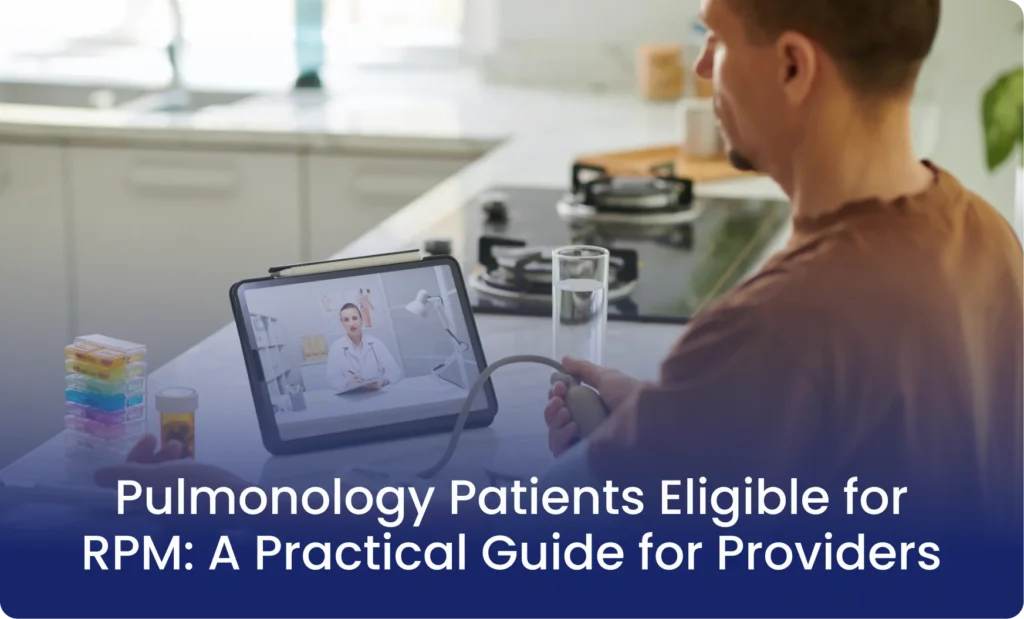
The first step in expanding remote patient monitoring services for a pulmonology practice is determining which patients are eligible. Chronic respiratory conditions like COPD and pulmonary fibrosis often require ongoing monitoring. RPM offers a way to track symptoms, oxygen levels and medication adherence from home.
The real question most practices ask is practical: which of my pulmonology patients are good candidates, and how do I identify them? That’s what this guide covers. We will walk through the key eligibility criteria for pulmonology patients under current CMS and payer guidelines. You will also see how MediRemote simplifies enrollment, device setup, and billing so your team can focus on patient care. This post will help you find the right candidates and monitor them more quickly.
Chronic Respiratory Conditions Eligible for RPM
Not every pulmonology patient automatically qualifies for remote patient monitoring. But many with chronic or high-risk respiratory conditions do. Under current CMS and commercial payer guidelines, eligibility depends on a confirmed diagnosis, medical necessity and the potential for RPM to improve outcomes or reduce hospital use.
Here are the most common chronic respiratory conditions that typically meet RPM criteria:
- Chronic Obstructive Pulmonary Disease
- Asthma (moderate to severe or uncontrolled)
- Pulmonary Fibrosis and Interstitial Lung Diseases
- Bronchiectasis
- Cystic Fibrosis
- Pulmonary Hypertension
- Post-Lung Transplant or Thoracic Surgery Patients
- Chronic Respiratory Failure or Oxygen-Dependent Patients
The eligibility of each patient for RPM should ultimately be assessed on an individual basis. A diagnosis of chronic respiratory conditions can be a crucial place to start. However, the decision should be based on the patient’s overall clinical status.
RPM Eligibility Criteria for Pulmonology Patients
All individuals with lung conditions do not qualify for RPM by default. The idea here is to ensure that technology suits people who need it the most. Medicare defines general criteria that almost all practitioners stick to. However, commercial payers can have their own rules to follow. Let’s discuss what really counts when it comes to pulmonology patients’ eligibility in 2026.
Established Patient Relationship
RPM services can only be offered to an established patient. The billing practitioner needs to have had at least one face-to-face encounter with the patient in the prior year. This requirement returned after the public health emergency flexibilities ended and remains in place.
Medical Necessity Tied to an Acute or Chronic Condition
There is no closed list of approved diagnoses. CMS requires that the monitoring be medically reasonable and necessary for an acute or chronic condition. This most often applies to:
- Moderate-to-severe COPD with a history of exacerbations
- Asthma that is poorly controlled or requires frequent medication adjustments
- Interstitial lung disease or pulmonary fibrosis with progressive oxygen needs
- Post-COVID or other residual respiratory impairment that still requires close tracking
Device and Data Transmission Requirements
The equipment itself must meet the FDA definition of a medical device and transmit data automatically. Patient-entered numbers alone do not qualify for RPM.
Common pulmonary devices include:
- FDA-cleared pulse oximeters
- Connected spirometers
- Contactless respiratory monitors
For the device-supply codes, data must be transmitted on either:
- 2–15 days in a 30-day period
OR
- 16 or more days
Only one of these codes can be billed per patient per 30-day period. The treatment-management codes have their own time thresholds and no longer require the old 16-day minimum.
Patient Consent and Clinical Oversight
Consent must be obtained and documented before services begin. This involves making the patient aware of what he/she will be monitored for, the use of that data, and the possible co-payment. The clinical staff under the supervision can do most of the daily monitoring activities.
Practical Considerations That Strengthen Eligibility
A patient’s overall condition is also an important part of determining whether RPM is appropriate. Patients may be stronger candidates when they have:
- Recently been hospitalized or visited the emergency room because of a respiratory problem
- A need for supplemental oxygen
- Limited mobility that makes frequent office visits difficult
- Transportation challenges
- Multiple chronic health conditions that require closer monitoring
The practice should also document why specific health measurements are being monitored.
Commercial insurance plans may have additional requirements. Some plans may cover RPM for COPD but have different rules for other respiratory conditions. Practices should check the patient’s specific insurance policy before enrolling them.
Key Vitals and Devices Used to Monitor Pulmonology Patients Remotely
Effective remote patient monitoring for pulmonology depends on tracking the right physiologic signals with FDA-cleared technology. RPM devices must automatically transmit clinical-grade data that providers can act on.
Here are the core vitals and the devices most commonly used to capture them in pulmonary RPM programs:
| Vital / Parameter | Primary Clinical Value | Common Devices Used |
| Oxygen Saturation (SpO₂) | Early detection of desaturation and impending exacerbations | Cellular or Bluetooth pulse oximeters |
| Heart Rate / Pulse | Identifies tachycardia linked to respiratory distress or infection | Built into most pulse oximeters |
| Respiratory Rate | Rising rate often signals early distress before symptoms worsen | Contactless sensors or advanced wearables |
| Peak Expiratory Flow (PEF) & Spirometry (FEV₁) | Tracks airway status and lung function changes | Connected peak flow meters and portable spirometers |
| Blood Pressure | Supports management of common comorbidities (hypertension, heart failure) | Cellular/Bluetooth blood pressure cuffs |
| Weight | Detects fluid retention that can worsen breathing | Connected digital scales |
Steps to Enroll Eligible Pulmonology Patients in RPM
Enrolling pulmonology patients in remote patient monitoring doesn’t have to be complicated. It does require a clear and compliant workflow. From identifying the right candidates to getting devices in their hands, each step builds the foundation for successful monitoring and reimbursement.
Here’s a practical four-step approach that works well in pulmonology practices.
1. Identify patients who meet clinical and coverage criteria
Start by reviewing your active panel for established patients who have a chronic or acute respiratory condition. You should also make sure ongoing physiologic data would be meaningful for the condition. Confirm the patient has an established relationship with the practice and that monitoring is medically reasonable and necessary.
2. Discuss the program and obtain informed consent
Reach out by phone or during an office visit and explain how RPM works in everyday language. Concentrate on the practical advantages, and be clear with the patient if there may be shared costs involved. Make a note of this discussion in the patient’s medical record. This is done to gain the trust of the patient and set reasonable expectations.
3. Order the service, select devices, and complete setup education
The clinician orders RPM and selects the appropriate FDA-approved devices after consent is obtained. Schedule a short setup session. Walk the patient through how to use the device and what a normal reading looks like for them. Confirm the first successful transmission before ending the session. This hands-on education is billable under the setup code and dramatically improves long-term adherence.
4. Activate monitoring and establish the ongoing care loop
The clinical team begins reviewing information per the practice protocol and sets personalized alert limits based on the patient’s baseline. Plan the first follow-up for reviewing the information and answering any queries regarding the action plan. From here on, the process revolves around regular data reviews and follow-ups. Patients should know exactly how and when they can expect contact from the team.
Conclusion
Enrolling the right pulmonology patients in Remote Patient Monitoring isn’t just about checking billing boxes. This involves providing a better way for high-risk respiratory patients to be able to monitor their condition in the comfort of their homes. When the right criteria are used together with the right devices, and when the process of enrollment goes smoothly, RPM will prove to be very effective.
At MediRemote, we have spent years helping pulmonology practices build RPM programs. We handle the operational work, from identifying eligible patients and handling device logistics to clinical monitoring and compliant documentation.
Frequently Asked Questions
Do I need to have two chronic conditions to start RPM?
No. RPM only requires one condition where the monitoring makes clinical sense. Many people with just COPD or asthma are enrolled successfully.
Will the insurance cover this?
Medicare covers it when the service is medically necessary. Most commercial plans follow similar rules. Your clinic’s billing team or billing partner can check your specific coverage before you start.
What is the cleanest way to handle consent?
Obtain and document it before any device is issued. Verbal consent is acceptable if properly noted in the chart. But many groups still prefer a simple signed form for audit protection.
Who can perform the initial device setup and education?
Clinical staff under general supervision can handle most of the 99453 work. The billing practitioner remains responsible for the overall order and medical necessity determination.
Can we bill RPM and CCM in the same month for the same patient?
Yes, provided the time and activities are distinct and not double-counted. Many COPD patients with a second chronic condition are excellent candidates for both programs.