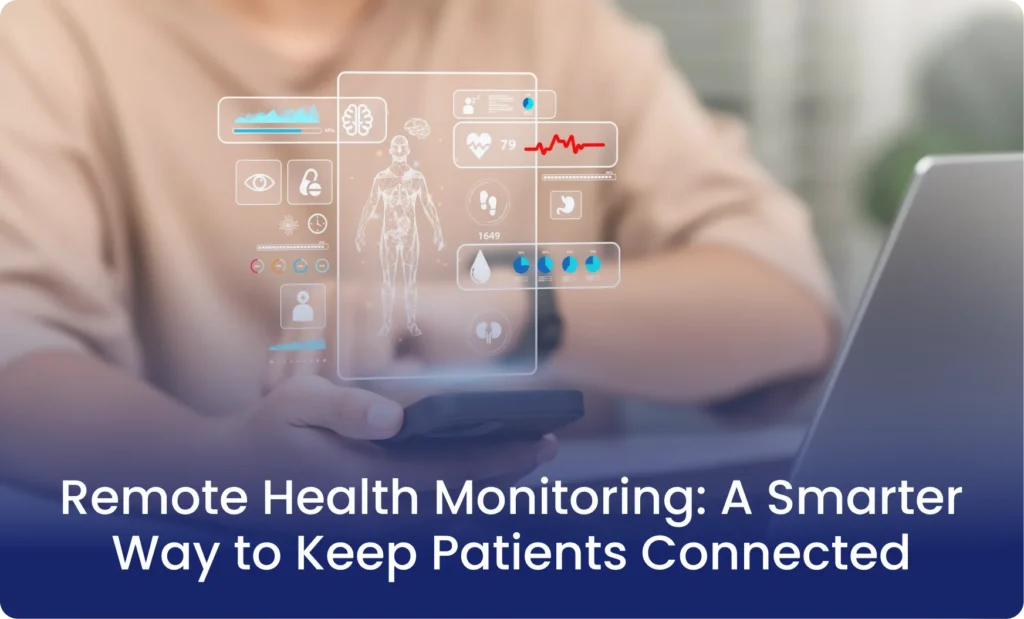
Remote health monitoring is changing how care is delivered. It is now easier for providers to track patients beyond the clinic and respond before small issues turn into bigger problems. Leading RPM companies position this service around better chronic care management and improved patient engagement. This shows that the market is focused on both convenience and clinical value.
The true benefit here is that your patient can continue receiving their services without having to visit your office every time something changes. This will ensure more timely assistance in cases of such chronic diseases as diabetes and hypertension and make the process easier for everyone involved.
At Medi Remote, we believe that exceptional healthcare shouldn’t be restricted by location. It is about giving you peace of mind and reducing unexpected hospital visits. This guide will break down exactly how remote health monitoring is making better health more accessible.
What is Remote Health Monitoring?
Remote health monitoring is a way to track a patient’s health without requiring them to visit a clinic every time. It involves the use of simple connected devices and wearables that allow for data collection in real-time.
That information flows securely to your healthcare team. The team can spot potential issues early and adjust treatments promptly. In addition, they help offer personalized advice without requiring unnecessary office visits. Remote health monitoring plays an important role in managing chronic diseases and ensuring the engagement of patients. It also improves care coordination and makes healthcare more convenient and accessible to patients.
Remote Health Monitoring Devices
Remote health monitoring devices are the tools that make continuous care possible outside the clinic. They help patients share accurate health data from home. The providers get the live information they need to make timely decisions. The best device is usually the one that fits the patient’s condition and daily routine.
Blood Pressure Monitors
Those people with problems like hypertension or heart disease tend to monitor their blood pressure through remote BP devices. This allows them to report their results to the healthcare providers as well as to monitor their own blood pressure in the privacy of their homes.
Glucose Monitors
Glucose monitors are essential for patients with diabetes. With this monitor, you will be able to check your blood sugar levels on a daily basis. Most of the latest glucose monitors are connected. Therefore, the readings will go straight to your healthcare provider or app.
Pulse Oximeters
The pulse oximeter shows the oxygen saturation level and pulse rate. It is beneficial for patients with respiratory diseases and during the recovery period. It is easy to use this device, and you will be able to get quick information on your breathing function. It can be helpful in home monitoring of COPD and asthma patients.
Smart Scales
Smart scales are not only used to measure weight but have other functions. In the case of remote health monitoring, they are used to measure fluid retention, weight fluctuations, and risk of heart failure. Since the results are digitalized, the doctor will be able to identify the problem at an early stage.
Wearable Health Trackers
This device measures activity, heart rate, and sleep; sometimes, it can measure stress and oxygen level. It is good because it gathers data automatically all the time.
Remote Health Monitoring Software
Remote health monitoring software acts as the link between the device, the patient, and the medical professional on one platform. This software will collect the health information collected by the device and then organize it into a format where the healthcare provider can review it without having to meet the patient physically.
Data Collection and Tracking
The software will collect the data and record it on the central dashboard. The broad perspective allows for tracking of the trend over time rather than just one single reading.
Patient Engagement Tools
Another feature of a successful remote health monitoring solution is its ability to facilitate patient engagement. Such features as reminder systems and progress tracking promote consistency. The patients will most likely be more inclined to stick to the program since they will be able to keep track of their numbers and understand what they signify.
Provider Dashboards Securely
A good dashboard will allow the medical professional to visualize all the data collected. Providers can review readings, flag concerns and act when something changes. This saves time and makes care coordination feel much smoother.
Integration With Care Workflows
The best software fits naturally into existing clinical workflows. It should support communication, reporting, and follow-up in a way that feels practical for busy teams. Adoption is typically much higher when remote monitoring software is user-friendly.
Best RPM Platforms
Medi Remote is the best remote health monitoring platform that makes care easier to manage for both providers and patients.
Other notable platforms are the following:
- Prevounce
- HealthSnape
- TimeDoc Health
- Healtharc
Benefits of Remote Health Monitoring
Remote health monitoring services have truly changed how we think about staying healthy. The real advantages are for patients dealing with chronic illnesses or those who live in the countryside. They can keep track of relevant health data right from their own home in real-time. This strategy usually results in better outcomes and gives them control over their own health.
Here are some of the most valuable benefits that remote health monitoring provides:
- Early Detection and Prevention of Complications
- Better Management of Chronic Illnesses
- Greater Convenience and Reduced Travel Burden
- Cost Savings for Patients and Healthcare Systems
- Increased Patient Engagement and Empowerment
- Improved Access to Specialist Care
- Enhanced Peace of Mind for Families and Caregivers
- Data-Driven Insights for Personalization
Challenges Associated With Remote Health Monitoring
Remote health monitoring carries vast opportunities for proactive care. However, it does have certain constraints that can influence the efficiency of remote health monitoring in specific cases.
These are some of the most common challenges associated with remote health monitoring:
- Obstacles Associated With Technology
There is a risk that elderly patients or patients not familiar with technology might face difficulty setting up the device as well as resolving any connectivity problems. Rural areas without a proper broadband internet connection will complicate remote monitoring.
- Data Privacy and Security Concerns
Patient ofter wonder about privacy and security concerns about the sharing of vital signs with third parties. The HIPAA-compliant platforms and strong encryption help. But the fear remains valid and can discourage adoption.
- Accuracy and Reliability Issues
Consumer-grade wearables and sensors sometimes produce false readings or miss subtle changes. This creates a risk of either unnecessary panic from false alarms or dangerous complacency.
- Alert Fatigue for Healthcare Teams
Physicians and care coordinators may become overburdened when systems produce an excessive number of notifications. This can lead to slower response times for genuine issues or even burnout among staff.
- Integration and Workflow Hurdles
Many healthcare systems still struggle to incorporate remote data into existing electronic health records seamlessly. Fragmented platforms and manual data entry create extra work for providers.
- Patient Engagement and Long-Term Adherence
Some people may lose interest over time. Wearing devices daily and consistently logging information requires discipline that not everyone can maintain.
Future of Remote Health Monitoring
The future of remote health monitoring looks increasingly patient-centered and data-driven. Remote patient monitoring will probably become a standard component of managing chronic diseases and preventive health as more healthcare teams use digital care models. Better devices and smarter software are making it easier to collect useful health data without adding extra burden for patients.
This evolution is fundamentally changing the patient and provider experience through several core advancements:
- Smarter Technology
- Predictive AI and Early Warning Systems
- More Personalized Care
- Invisible, Next-Generation Wearables
- Stronger Role in Chronic Care
- Better Care Access
- Growth in Predictive Care
Conclusion
Remote health monitoring is quickly becoming one of the most practical ways to improve everyday care. It provides a way for the patient to remain in touch with their doctor and monitor any changes in their state of health. Such monitoring will prove to be highly useful in cases of chronic illnesses, among other benefits.
Remote health monitoring does not replace all face-to-face visits. But it is a powerful support system when used the right way. Remote health monitoring will only become more useful and more important in modern healthcare as technology continues to improve. Mediremote offers a smart place to begin for patients and providers looking for a more connected care experience.
Frequently Asked Questions
Is remote patient monitoring different than remote health monitoring?
Remote patient monitoring is a medical subset of telehealth that requires FDA-approved medical devices and active physician oversight. Remote health monitoring is a broad consumer term covering any personal tracking.
Can remote health monitoring replace doctor visits?
No. It does not replace every in-person visit. It works alongside regular care by giving providers ongoing information between appointments.
How accurate are remote health monitoring devices?
Many devices are highly accurate when used correctly. Accuracy depends on the quality of the device and consistent use by the patient.
How engaged do patients usually feel with remote monitoring?
Most people become more involved in their own health. Seeing your own numbers in a simple app often motivates better daily habits and more productive conversations with your doctor.
Is remote health monitoring part of telehealth?
Yes. It is closely related to telehealth. Remote monitoring supports virtual care by giving providers ongoing patient data between appointments.